





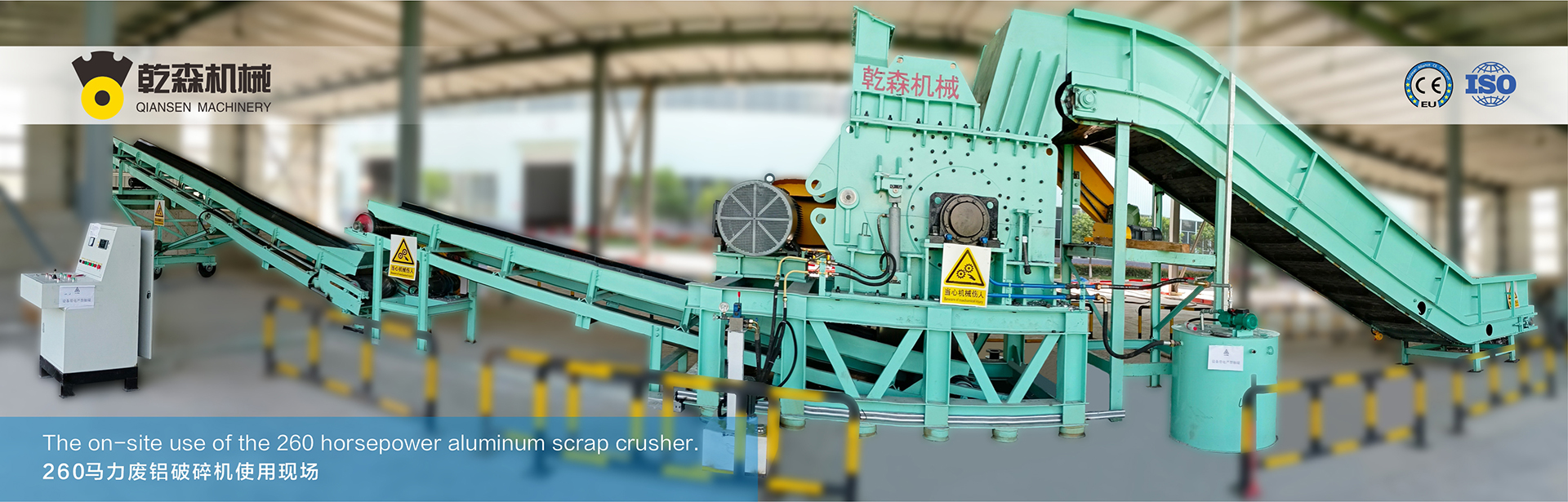
Heavy-Duty Tin Can Shredder Machine for Continuous Metal Scrap Beneficiation
Released on Sep. 10, 2026
Post-consumer food packaging, tinplate containers, and used beverage cans (UBC) present a distinct mechanical challenge for scrap metal processors, municipal solid waste (MSW) reclaimers, and secondary smelting operations. While these materials are rich in recoverable steel and aluminum, their volumetric profile is inherently disadvantageous. Hollow, thin-walled containers trap excessive air, yielding low bulk densities that typically range between 50 to 90 kilograms per cubic meter. Transporting uncompressed or unshredded light scrap is economically non-viable, and charging loose containers directly into secondary remelting furnaces induces catastrophic oxidation loss, heavy slag formation, and prolonged melt cycles.
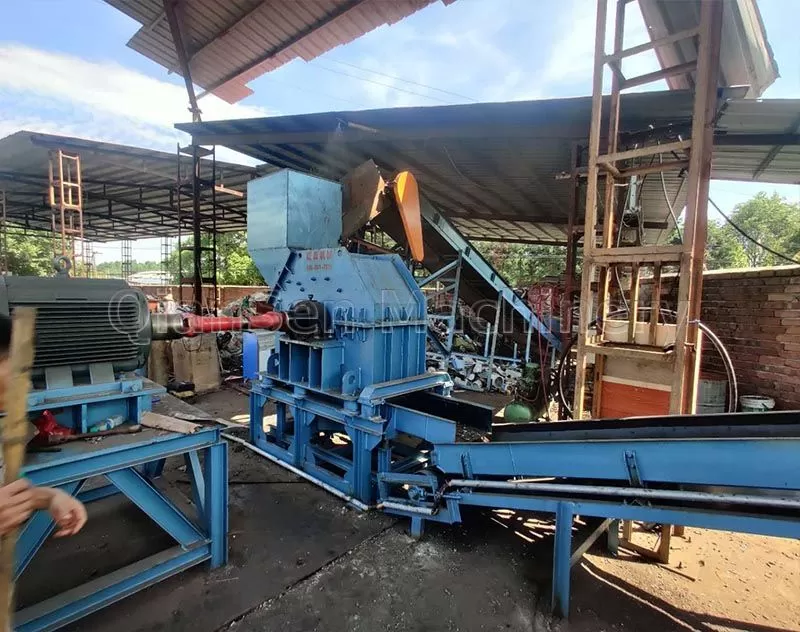
Deploying an industrial tin can shredder machine transforms hollow, voluminous tins into clean, high-density fragments ready for downstream separation and metallurgical recycling. Achieving optimal liberation of coatings, labels, and residual organic content while minimizing mechanical wear requires a deep understanding of continuous shear mechanics, blade metallurgy, and system sizing parameters.
Material Dynamics of Tinplate and Light Sheet Scrap
Processing food and beverage packaging requires specialized machinery because "tin cans" are rarely uniform in chemical composition. Industrial recycling streams generally encounter two distinct sheet substrates:
Tin-Plated Cold-Rolled Steel (Tinplate): Mild, low-carbon steel strip coated on both sides with commercial pure tin via electrolytic deposition. The base steel imparts tensile strength (typically 300 to 550 MPa), while the tin layer resists corrosion. In municipal and post-industrial scrap, these cans often retain interior phenolic or epoxy-based lacquer coatings and external paper or lithographic labeling.
Aluminum Alloys (3004 / 5182 Series): Predominantly utilized in carbonated beverage cans, where the body is drawn and ironed from 3004 alloy, and the easy-open end is stamped from magnesium-rich 5182 alloy. The yield strength is lower than steel, but the ductility necessitates clean mechanical cutting edges to prevent material stretching and wrapping around rotating shafts.
Bi-Metal Constructions: Cans featuring a tinplate body paired with an aluminum pull-tab end. Processing these hybrids demands fine comminution to dislodge mechanical interlocks, allowing downstream sorting technologies to perform clean sorting.
The volumetric instability of these feedstocks is exacerbated by variable compaction states. Loose, loose-baled, or partially crushed cans behave differently inside a cutting chamber. High-speed shredding systems must exert sustained grab force to overcome the low frictional coefficient of lithographed surfaces and the natural buoyancy of loose tins within the hopper.
Mechanical Architectures Defining the Modern Tin Can Shredder Machine
Size reduction machinery for light metal hollowware splits fundamentally into two mechanical approaches: low-speed, high-torque dual-shaft rotary shearing and high-speed vertical or horizontal hammermills. The optimal engineering choice hinges on the targeted physical condition of the final product and the acceptable limits of processing dust, energy consumption, and capital expenditure.
Low-Speed, High-Torque Rotary Shear Configuration
Dual-shaft shear shredders operate via counter-rotating hexagonal or splined shafts driven by an electric motor coupled to a planetary gearbox or a direct hydraulic drive. The shafts rotate at speeds typically between 12 to 35 revolutions per minute. Circular blades mounted on each shaft interleave with tightly controlled lateral tolerances, creating continuous scissors-action shearing zones.
Tear and cut action predominates. The hooked teeth integrated into the periphery of each knife draw the thin-walled container into the cutting nip. As the container passes through the transverse clearance between opposing blades, the steel or aluminum sheet is cut into uniform strips matching the width of the cutter discs. Radial hooks subsequently section the strips along the longitudinal axis. Equipment designed by manufacturers such as QianSen incorporates high-precision machining of blade profiles and spacer rings to maintain consistent cutting clearances, preventing thin gauge tinplate from wedging between knives and causing shaft deflection.
High-Speed Impact and Granulation Mechanisms
Where secondary steelmakers demand high-density "puck" or granular shapes, vertical hammermills or ring crushers serve as primary or secondary refining units. Operating at peripheral tip speeds exceeding 50 to 70 meters per second, these systems rely on kinetic energy transfer. Free-swinging manganese alloy hammers strike the cans mid-air, driving them against corrugated stator wear plates.
The violent kinetic collisions fold, crumple, and ball the material into dense, potato-sized or pebble-sized nuggets. This physical deformation dislodges surface paints, lithography, paper labels, and residual organic coatings via intense autogenous friction. However, impact pulverization generates higher levels of air-borne metal fines and requires robust acoustic enclosures and dust mitigation infrastructure compared to rotary shear configurations.
Tribology, Knife Metallurgy, and Chamber Engineering
Wear in shredding light-gauge metal scrap is driven by micro-abrasion from residual sand, glass, or soil contaminants, compounded by cyclic impact stresses. While mild tinplate does not possess severe tensile resistance, the repetitive action of shearing millions of work-hardened edges induces edge rounding, micro-chipping, and thermal softening on substandard blade materials.
Substrate Metallurgy for Cutter Knives
Blade durability relies on high-alloy tool steels tailored for cold-work applications. Industrial standard choices include:
AISI D2 / 1.2379: A high-carbon, high-chromium tool steel offering exceptional wear resistance. After vacuum heat treatment, double tempering, and cryogenic processing, it attains a hardness of 58 to 62 HRC. It is suitable for controlled, uniform scrap streams free of heavy unshreddable tramp metals.
Specialized Alloy Forgings: Modified medium-carbon, high-chromium, nickel-molybdenum steels hardened to 54 to 56 HRC. These grades sacrifice slight superficial wear resistance to attain impact toughness, eliminating the hazard of catastrophic knife fracturing when processing contaminated bales containing structural iron, heavy bolts, or tools.
Weld Overlay and Cladding: Hardfacing alloy deposits applied to structural carbon steel cores. While economical for large primary shredder disks, maintenance personnel must maintain strict thermal control during re-welding to prevent hydrogen-induced cracking across the parent metal boundary.
Chamber Geometry and Shaft Deflection Mechanics
The geometric arrangement of the shredder cutting chamber dictates throughput efficiency. Hopper throats must be engineered with steep incline angles and anti-bridging geometries to ensure hollow cans gravity-feed directly into the active cutting field. In dual-shaft machines, clearing fingers or stripping combs positioned underneath the shafts actively clear cut scrap from between the blades, stopping sheared tin fragments from wrapping around the shaft core.
Shaft design calculations must account for cyclic torsional shear and bending fatigue. High-tensile forged alloy shafts (such as 42CrMo4 or 4340 grade) are precision-turned and splined. Machined radii at every diameter transition mitigate stress concentrations, guaranteeing structural rigidity during sudden chamber blockages caused by non-ferrous lumps or structural off-cuts.
Integrating Downstream Separation and Material Beneficiation
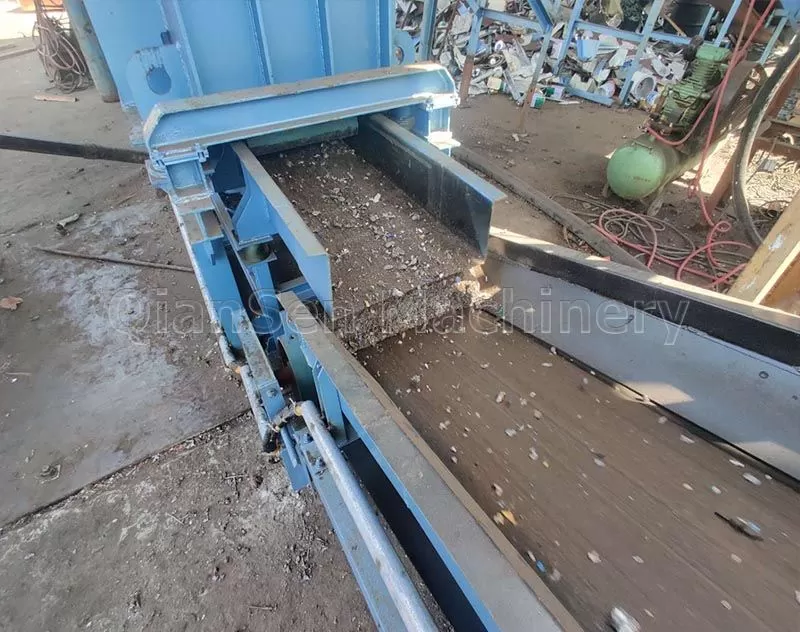
Size reduction constitutes merely the foundational step in scrap value realization. Following discharge from the cutting zone, the discharge of a heavy-duty tin can shredder machine produces fragmented strips and shreds ready for downstream classification systems designed to isolate clean ferrous, non-ferrous, and residual fractions.
Magnetic Separation for Tinplate Isolation
High-gradient, self-cleaning cross-belt overband magnetic separators or permanent neodymium magnetic head pulleys are positioned immediately downstream from the shredder discharge conveyor. Because tinplate consists predominantly of low-carbon steel, recovery efficiency exceeds 98% under optimized bed depth conditions. The fragmented nature of shredded tin eliminates the air-pocket entrapment common to whole cans, preventing organic residues or loose aluminum tabs from being mechanically trapped and carried into the ferrous clean stream.
Eddy Current Separation for UBC Aluminum Fractions
For mixed packaging scrap collection streams, non-ferrous aluminum cans pass under the magnetic head unaffected. The non-magnetic stream is directed toward an eddy current separator (ECS). A high-speed rotating magnetic drum generates alternating pole magnetic fields, inducing localized eddy currents within conductive aluminum fragments. The resulting Lorentz force repels the aluminum pieces forward over an adjustable splitter plate, cleanly separating them from non-conductive plastics, unevaporated liquids, paper fibers, and glass.
Air Classification and De-Dusting
Furnace operators penalize scrap supplies that carry high ignition loss fractions. Shredded tin scrap often carries detached paper labels, plastic seals, and lacquer flakes. Zig-zag air classifiers or high-efficiency air knife aspirators introduce a counter-current air flow through the tumbling material stream. Light materials (density < 1.0 g/cm³) are extracted aerodynamically into cyclones and baghouse filters, leaving a bright, uniform metal scrap stream that commands premium prices from electric arc furnace (EAF) and secondary smelting facilities.
Operational Parameters and Sizing Criteria for Scrap Yards
Specifying the proper machinery requires balancing input feed variations against downstream handling capacities. Scrap processing plants must size their lines using true bulk throughput metrics rather than purely theoretical peak motor ratings.
| Parameter Category | Light Duty / Batch Operation | Medium Commercial Yard | Heavy Industrial Recycling Facility |
|---|---|---|---|
| Throughput (Metric Tons/Hour) | 0.5 – 1.5 t/h | 2.0 – 5.0 t/h | 6.0 – >15.0 t/h |
| Drive Power (kW) | 15 – 37 kW | 45 – 90 kW | 110 – 315 kW (Dual Drives) |
| Cutter Width Dimension | 15 mm – 20 mm | 20 mm – 30 mm | 40 mm – 75 mm |
| Feed Material Profile | Loose, collected residential cans | Flattened cans, mixed commercial UBC | Baled tins, UBC biscuits, dense packaging |
| Drive Architecture | Direct Electro-Mechanical | Electro-Mechanical with Fluid Coupling | Hydraulic Drive or Variable Frequency Drive |
Heavy-industry systems configured by QianSen utilize planetary reduction gearboxes with high dynamic service factors (service factor > 2.0). This mechanical overhead cushions the drive line against peak shock loads encountered when dense, folded steel cans jam momentarily in the cutting zone.
Control Philosophy and Overload Safeguards
Modern size reduction systems require sophisticated programmable logic controller (PLC) automation. The electrical management program continuously monitors real-time motor current consumption on each shaft. When an un-shreddable object—such as an overlooked solid steel shaft or thick structural plate—enters the chamber, the resulting torque spike triggers instantaneous motor overload limits within milliseconds.
The controller executes an automated multi-stage reverse sequence. The shafts decelerate, reverse direction for a programmable rotational duration to dislodge the obstruction, and subsequently cycle forward again to attempt cutting. If the resistance persists after three consecutive automated cycles, the system enters an emergency stop condition, engages visual-auditory alarm beacons, and opens hydraulic hopper covers to permit rapid manual inspection and extraction.
Economic Feasibility: Density Transformations and Furnace Yields
The operational justification for installing processing machinery rests upon transport optimization and secondary pyrometallurgical efficiency. Loose tin cans transport at roughly 3 to 4 metric tons per 40-foot shipping container, incurring severe freight penalties. Once processed through a heavy-duty size reduction circuit, bulk density rises to 450 to 700 kilograms per cubic meter, allowing transport vehicles to hit legal payload weight limits before reaching volume limits.
Downstream secondary smelters realize measurable operational cost reductions through improved scrap characteristics:
Reduced Melt Time: Fragmented scrap presents high surface-area-to-mass ratios, accelerating convective heat transfer within molten baths and shortening batch cycle times by up to 22%.
Minimized Dross Generation: In aluminum melting, un-shredded containers trap pockets of air that fuel internal oxidation reactions beneath the furnace roof. Pre-shredded and compacted material submerges rapidly into the melt, suppressing oxidation and maximizing metal recovery rates.
De-Tinning Compatibility: For specialized de-tinning facilities using alkaline electrolytic extraction processes to recover pure tin from steel substrates, shredded tinplate provides unobstructed chemical access to all coated surface areas, dramatically speeding up the leaching kinetics.
Frequently Asked Questions
What wear cycle can operators expect from a tin can shredder machine processing standard tinplate?
Blade lifespan depends directly on the presence of abrasive contaminants like grit, glass, and moisture within the feed scrap. Under standard clean scrap yard sorting conditions utilizing D2 tool steel knives, operators typically achieve between 1,200 to 2,000 operational hours before cutter edges require re-profiling, shimming, or surface restoration. Integrating an upstream screening trommel to extract non-metallic grit significantly extends cutter life.
Can light metal shredders effectively process whole compacted bales of cans?
Standard light-duty twin-shaft shredders cannot handle whole, high-density packaging bales. Attempting to feed dense cubes directly into low-powered cutters will cause continuous shaft stalls. Processing baled cans requires an ultra-heavy-duty primary shredder equipped with high-displacement hydraulic drives, aggressive hook geometries, and reinforced bearing carriers to tear the bale apart before primary cutting occurs.
How is cross-contamination managed between steel tinplate and aluminum beverage cans?
Segregation relies on downstream mechanical preparation. If the shredder output size is too coarse, mechanical interlocks—such as an aluminum lid crimped onto a tin-plated body—will survive the cut, degrading the purity of both output streams. Maintaining narrow cutter widths (15mm to 20mm) mechanically uncouples the crimped seams, allowing high-intensity magnetic head pulleys to extract the steel while cleanly releasing the aluminum to subsequent eddy current separators.
What preventative maintenance tasks protect drive components from mechanical failure?
Daily regimes require verification of gearbox oil levels, bearing grease replenishment via centralized automatic lubrication units, and thorough inspection of the cutting chamber for foreign object entrapment. Weekly protocols demand non-destructive checks on cutter torque settings, clearance gap measurements between cutter faces using feeler gauges, and thermal monitoring of bearing housings using infrared pyrometry to identify localized friction imbalances.
Is water injection recommended inside the shredding chamber during processing?
Dry processing is the standard protocol for post-consumer tin processing. Water misting is only introduced when incoming municipal scrap presents high volumes of combustible dust, explosive beverage vapors, or severe paper debris. While dampening suppresses dust and aids cooling, the resulting slurry of organic remnants and water accelerates corrosive wear on tool-steel blade faces and requires dedicated downstream wastewater filtration circuits.
Procurement Specifications and Engineering Consultation
Specifying and evaluating an engineered tin can shredder machine requires aligning drive power, cutting table dimensions, knife geometry, and discharge systems with your target output density and throughput volume. Scrap composition varies significantly by region, from loose post-consumer food cans to high-density reject rolls from packaging manufacturers. Contact the technical engineering department at QianSen to submit your scrap stream profiles, analyze bulk density requirements, and request a detailed system configuration proposal tailored to your processing operations.
Previous:
None