




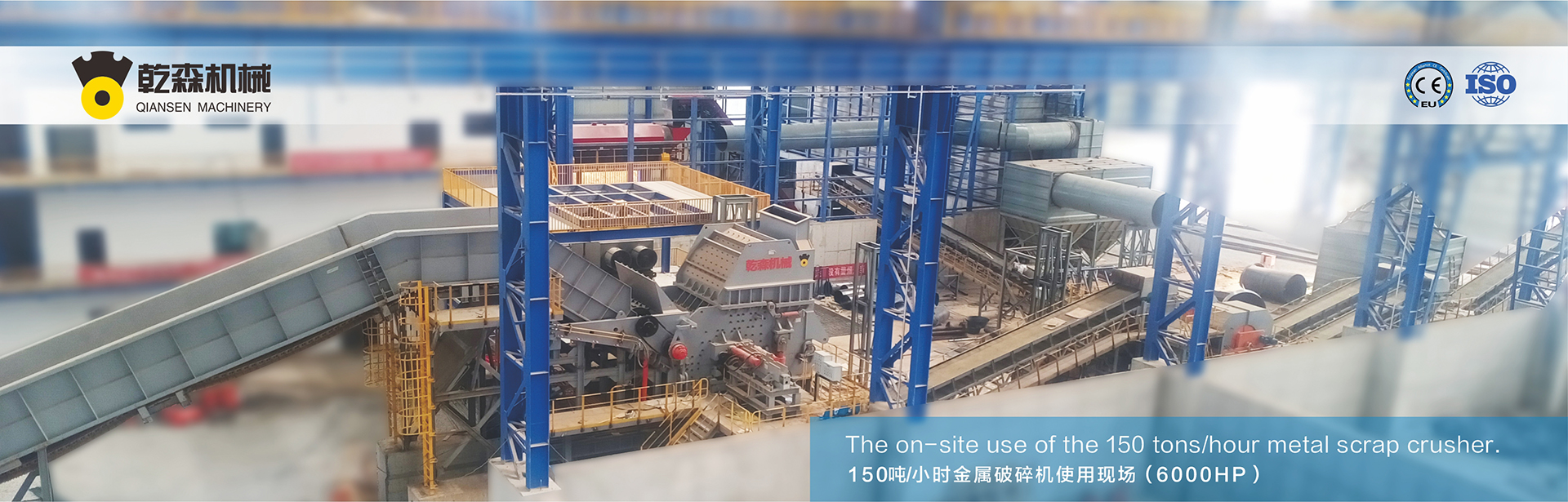
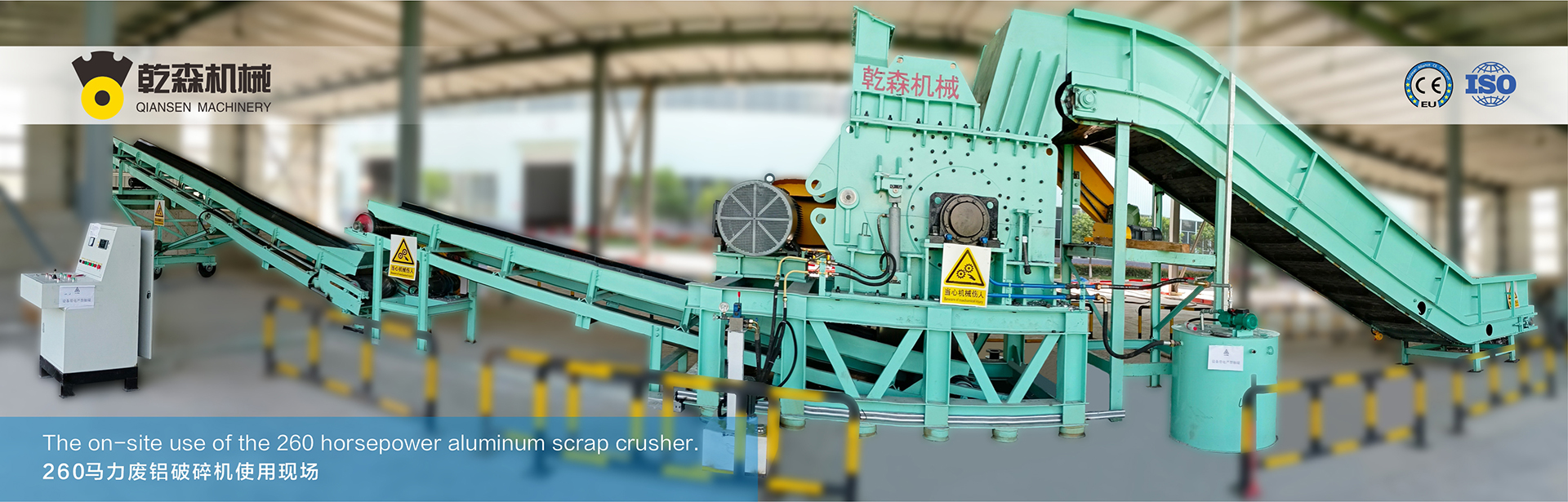
Heavy-Duty Giant Metal Shredder Architecture for Industrial Scrap Yards
Released on Sep. 05, 2026
Industrial metal recycling operations rely heavily on mechanical size reduction to transform bulky, heterogeneous scrap into high-density, furnace-ready charge materials. Within large-scale automotive shredding facilities, industrial demolition hubs, and global scrap processing yards, the deployment of a giant metal shredder serves as the operational nucleus. These massive machines, often rated between 2,000 and 10,000 horsepower, break down whole automobiles, white goods, structural steel profiles, and heavy mixed scrap into liberated, high-purity ferrous and non-ferrous fractions.
Designing and deploying processing infrastructure of this magnitude requires deep command of rotor dynamics, fracture mechanics, high-tensile metallurgy, and downstream separation physics. Understanding the systemic interaction between powertrain torque delivery, kinetic energy dissipation within the shredding chamber, and wear alloy behavior under intense impact stress allows scrap processors to maximize recovery yields while maintaining economic energy consumption per metric ton.
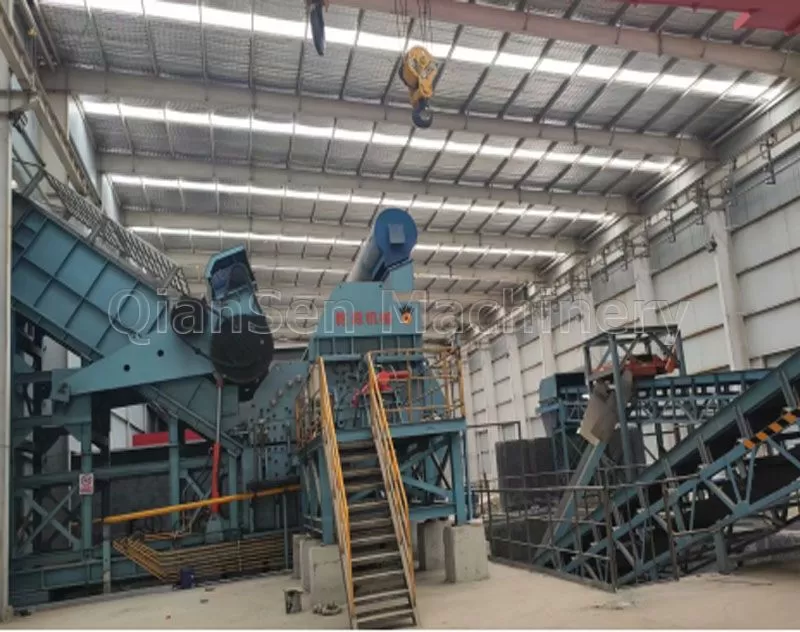
Kinetic Dynamics and Powertrain Topologies in a Giant Metal Shredder
The primary mechanical function of high-capacity scrap processing machinery is the rapid transformation of kinetic energy into destructive shear and compressive strain. The crushing chamber operates on high-velocity impact forces applied by freely swinging alloy steel hammers pinned to a rotating core assembly. The core engineering variable governing this process is total rotational inertia.
Rotational kinetic energy storage depends directly on the total mass and radius of gyration of the rotor assembly:
Ek = ½ I ω2
Where I represents mass moment of inertia and ω represents angular velocity. In operations processing dense structural shapes or engine blocks, this stored kinetic energy prevents motor stall during transient shock loads. Industrial manufacturers configure powertrains using two distinct theoretical philosophies:
Wound-Rotor Slip-Ring Induction Motors with Liquid Rheostats: Long considered the standard for mega-tonnage installations, these AC systems allow controlled slip during severe impact events. As the rotor encounters oversized tramp material, the motor slips its speed by 8% to 15%, discharging stored kinetic energy from the rotor mass while isolating the primary electrical substation from devastating current spikes.
Direct-Drive High-Torque Hydraulic Systems: Modern engineering pathways frequently specify low-speed, high-torque hydraulic motors or variable-frequency electric drives coupled to epicyclic planetary reduction gearboxes. These configurations deliver maximum rated torque across the entire speed envelope, facilitating immediate bi-directional rotor reversal to clear chamber jams without drawing unmanageable electrical loads. Heavy engineering groups such as QianSen emphasize integrated hydraulic dampening circuits within drive trains to neutralize torsional oscillation and protect mechanical gear teeth from fatigue cracking.
Feed control mechanisms dictate processing stability. Dual-roll hydraulic feed assemblies flatten incoming car bodies and bulky industrial components prior to chamber entry. Modulating feed speeds according to motor amperage and hydraulic system pressure prevents chamber gorging, smooths the power curve, and maximizes instantaneous fragmentation rates.
Chamber Geometry, Impact Mechanics, and Fracture Physics
Inside the crushing chamber, size reduction proceeds through combined impact, cleavage, tearing, and mechanical friction. Material entering through the intake chute encounters the feed anvil and cutter bar, where initial blunt-force impact generates severe localized plastic deformation, inducing rapid crack propagation along grain boundaries in brittle materials and necking-induced shear failure in ductile steels.
Rotor Configurations: Disc vs. Spider Architecture
Rotor construction dictates chamber throughput and operational longevity. Scrap processing plants employ two dominant rotor designs based on feed material classifications:
Disc Rotors: Built from a solid series of thick, laminated high-tensile alloy steel plates keyed to a forged alloy shaft. The disc profile prevents un-shreddables and oversized tramp elements from lodging beneath the hammer pins, making it exceptionally reliable for mixed light-to-medium gauge scrap and whole vehicles with intact drivelines.
Spider (Arm) Rotors: Characterized by open radial arms that support hammer pins across structural cross-sections. This geometry offers superior air circulation, lower rotational drag, and deeper material penetration into the cutting circumference, resulting in superior fragmentation rates on high-volume, loose light scrap.
Engineering teams at QianSen design chamber internal profiles using computer-modeled trajectory simulations to position the reject door with microscopic precision. When unshreddable dense solids enter the chamber, rotational trajectory forces project the unyielding mass against an upper ballistic pressure gate, releasing the object through a dedicated ejector chute before internal catastrophic component failure can propagate through the main housing.
Advanced Metallurgy and Tribological Wear Management
The economic viability of operating a giant metal shredder rests upon wear component service life. The internal chamber faces continuous abrasive grinding and repetitive high-velocity impacts, generating rapid wear across wear plates, breaker bars, hammer shanks, hammer tips, and discharge grates.
Austenitic Manganese Steels
Shredder hammers and protective rotor caps rely on modified austenitic manganese steel (Hadfield steel), containing approximately 1.1% to 1.3% carbon and 12% to 18% manganese, frequently alloyed with 1.5% to 2.5% chromium or molybdenum. Under initial conditions, austenitic manganese exhibits an unhardened matrix of roughly 200 to 220 HBW, maintaining high toughness that prevents brittle catastrophic shattering under ballistic shock loads.
During operation, repeated severe impact creates localized compressive deformation on the working face. This mechanical work induces a phase transformation in the crystal lattice, generating a micro-twinned, work-hardened surface layer exceeding 550 to 600 HBW. The critical mechanical advantage lies in the gradient: while the exterior skin develops intense abrasion resistance, the underlying core retains its ductile austenitic structure to absorb ongoing kinetic shocks.
Chamber Armor and Grate Configurations
Internal side liners and roof deflection plates are cast from high-strength chromium-molybdenum alloy steels heat-treated to an equilibrium between high yield strength and impact resistance. Bottom discharge grates control output density; hole diameter, edge geometry, and grid bar spacing dictate residence time. Smaller grate openings yield higher bulk density and superior paint removal on processed scrap, but increase specific power consumption per ton.
Downstream Material Classification and Non-Ferrous Liberation
Liberating the multi-material composite stream processed by a giant metal shredder requires multi-stage classification systems to extract maximum commodity value from the output flow. The fragmented aggregate leaving the bottom grate contains a heterogeneous mixture of clean ferrous metals, mixed non-ferrous metals, polymers, rubber, glass, and residual non-metallic fluff (Auto Shredder Residue, or ASR).
Air Separation and Ferrous Extraction
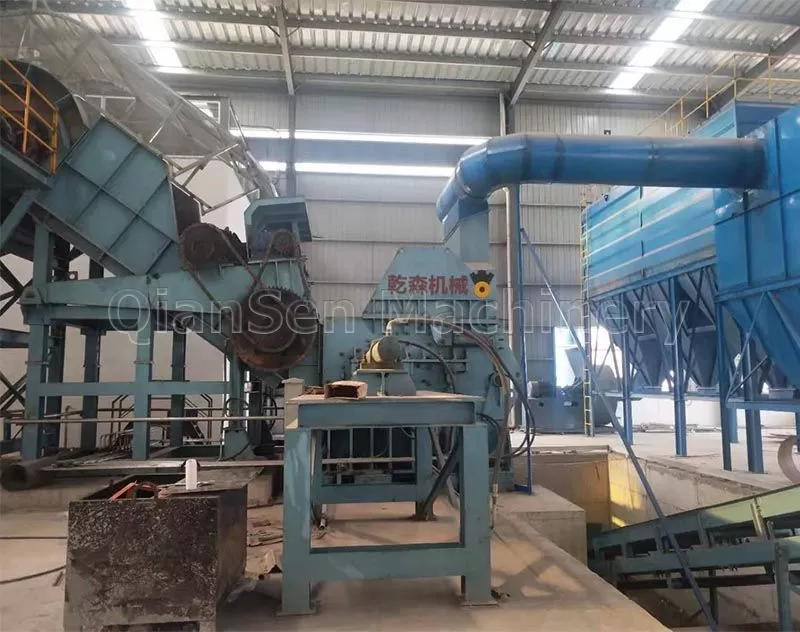
The discharge conveyor transfers raw shred onto an aggressive cascading air separation system (such as a Z-box or counter-flow air classifier). Fluidized air streams lift the light fractions—consisting of plastics, foams, textiles, and light paper—diverting them into high-efficiency cyclone collectors. This step prevents dense non-metallics from contaminating downstream magnetic capture points.
The remaining heavy fraction feeds into high-intensity, permanent or electro-magnetic drum separators. Cross-belt or axial drum magnets pull clean ferrous scrap (HMS 1/2 equivalents) from the burden, delivering high-density ferrous fragmentized scrap ready for direct electric arc furnace (EAF) consumption.
Non-Ferrous Recovery: Zorba, Zurik, and Twitch Production
The non-magnetic discharge from the primary drums contains the most valuable metallic fractions. Advanced processing lines route this fraction through a cascade of separation technologies:
Eddy Current Separators (ECS): High-speed eccentric neodymium-iron-boron magnetic rotors spin beneath a non-metallic conveyor shell. The rapidly alternating magnetic flux induces localized Eddy currents within conductive non-ferrous particles, generating a repulsive magnetic counter-field that physically repels aluminum, copper, and zinc over a separator splitter bar, producing raw Zorba.
Induction Sorting Systems (ISS): Downstream from the ECS, sensor-based electromagnetic sensors detect localized electrical conductivity beneath a continuous high-speed belt, triggering high-speed micro-pneumatic air nozzles to eject stainless steel and wire fragments (Zurik).
X-Ray Transmission (XRT) and Optical Sorting: Industrial optical and dual-energy X-ray systems classify metals by elemental density, distinguishing cast aluminum from wrought aluminum alloys to refine Zorba into furnace-ready Twitch.
Lifecycle Optimization and Operational Economics
System availability and cost efficiency require systematic preventative maintenance architectures. The total cost of ownership for a giant metal shredder hinges upon balancing specific power consumption against component wear cycles.
| Operational Parameter | Conventional Shredding Range | Optimized High-Efficiency Range |
|---|---|---|
| Specific Energy Consumption | 38 – 52 kWh / Metric Ton | 28 – 35 kWh / Metric Ton |
| Hammer Wear Rate | 1.8 – 2.5 grams / Metric Ton | 1.1 – 1.6 grams / Metric Ton |
| Ferrous Yield Purity | 94% – 96% Fe Content | 98.5% – 99.2% Fe Content |
| Bulk Density of Finished Shred | 50 – 65 lbs / cubic foot | 70 – 85 lbs / cubic foot |
Reducing downtime during hammer and liner changeouts is critical. Modern installations utilize automated hydraulic pin pullers, integrated housing hood-opening cylinders, and quick-release wedge clamping mechanisms. Incorporating heavy-duty bearing housings with dual-channel spherical roller bearings, monitored continuously by vibrational sensors and synthetic grease-injection networks, prevents catastrophic bearing race failures before minor harmonic anomalies escalate.
Carefully selecting chamber configuration, downstream separation machinery, and partnering with premier manufacturers like QianSen ensures your giant metal shredder installation achieves optimal uptime, peak ferrous recovery rates, and superior balance sheet returns over decades of punishing scrap throughput.
Frequently Asked Questions
What is the minimum recommended horsepower for processing whole auto bodies?
To shred whole, un-stripped automobiles (including engine blocks and drivetrains) without constant jamming or excessive electrical spikes, a system generally requires a minimum of 3,000 to 4,000 horsepower. Smaller operations utilizing pre-flattened car shells without heavy structural axles can utilize lower capacities, but sustained single-pass automotive shredding requires high rotational mass and severe kinetic energy reserves found in machines rated at 4,000 HP and higher.
How does Hadfield manganese steel prevent catastrophic hammer failure?
Austenitic manganese steel maintains a uniform face-centered cubic crystal structure that delivers unmatched ductility and impact absorption properties. When hit with massive force, it does not shatter cleanly along cleavage planes. Instead, the surface layers work-harden rapidly into high-hardness martensite/twinned austenite, while the inner substrate remains completely ductile, allowing the hammer to bend and absorb shock loads rather than fracturing abruptly.
What causes un-shreddables to damage a heavy shredding rotor?
Massive solid steel shafts, oversized structural counterweights, or solid alloy ingots that cannot be sheared or fragmented create severe localized dynamic friction and mechanical arrest. If these tramp items cannot exit through the ballistic reject chute, the sudden deceleration transfers enormous torsional torque backwards through the rotor shaft into the bearings and transmission system, resulting in sheared keyways, cracked bearing blocks, or permanent shaft deflection.
What is the difference between Zorba, Zurik, and Twitch?
These are standard scrap trade classifications derived from the non-ferrous fraction of fragmented scrap. Zorba consists of mixed non-ferrous metals dominated by aluminum, copper, zinc, and brass derived from eddy current separators. Zurik comprises predominantly stainless steel and mixed alloy wires extracted through induction sensor systems. Twitch refers to shredded, high-purity aluminum scrap that has been mechanically separated from heavy non-ferrous metals like zinc and copper using X-ray transmission or heavy-media sink-float technologies.
How does air cascade classification affect downstream furnace efficiency?
Effective air classification strips light dust, fiber, rubber particles, and foam out of the metallic stream before secondary sorting. Removing these light organic components prevents them from melting or combusting in the secondary melting furnace, significantly lowering dross formation, decreasing hazardous baghouse emissions, minimizing slag generation, and yielding cleaner, higher-density ferrous charges for steelmaking operations.
For custom engineering inquiries, powertrain sizing studies, and plant layout designs for your high-tonnage scrap recycling operations, contact our heavy engineering group directly at info@scrapcrusher.com to evaluate processing configurations suited to your operational requirements.
Previous:
None