





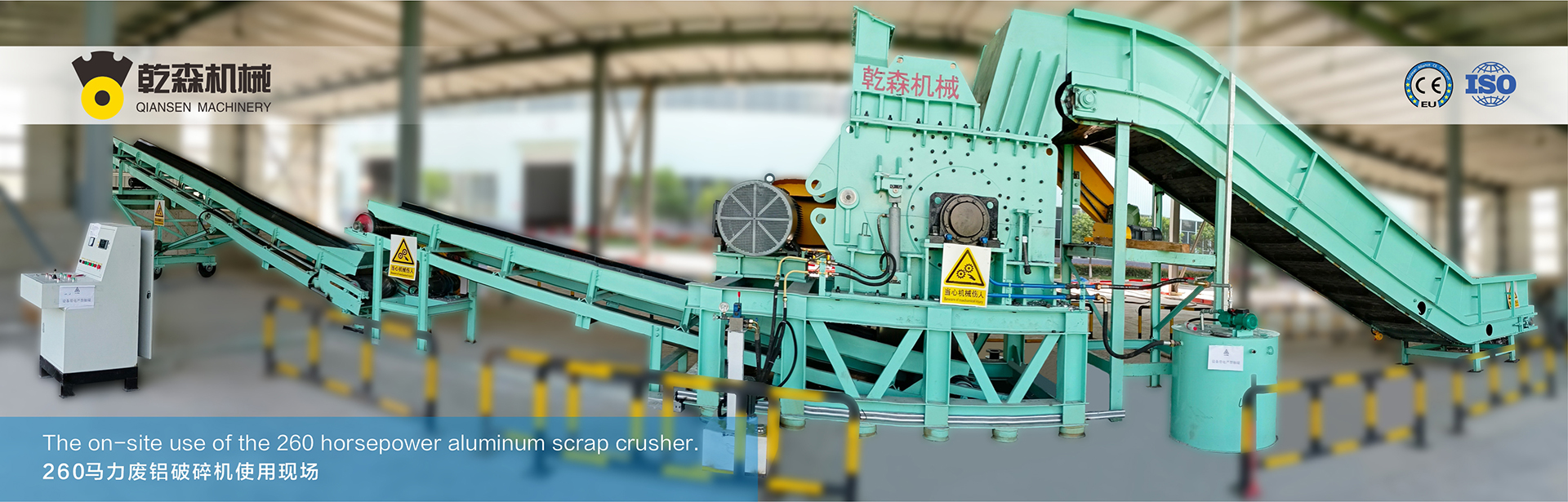
Heavy Metal Shredder Engineering: Cutting Dynamics, Durability & Sizing
Released on Sep. 03, 2026
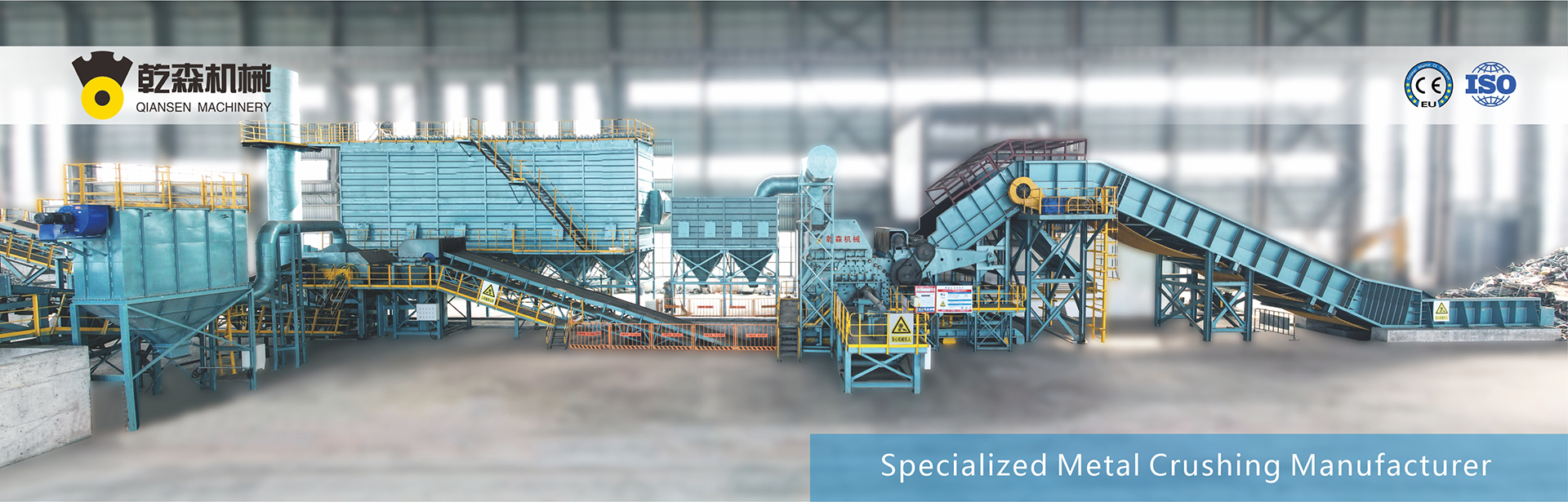
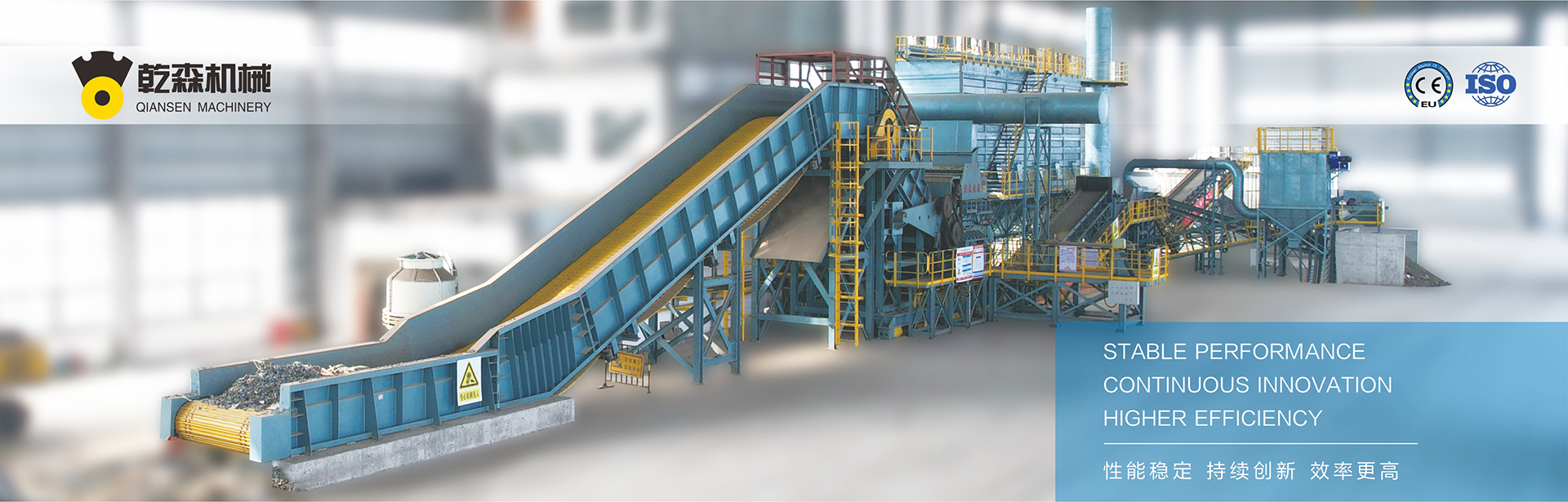
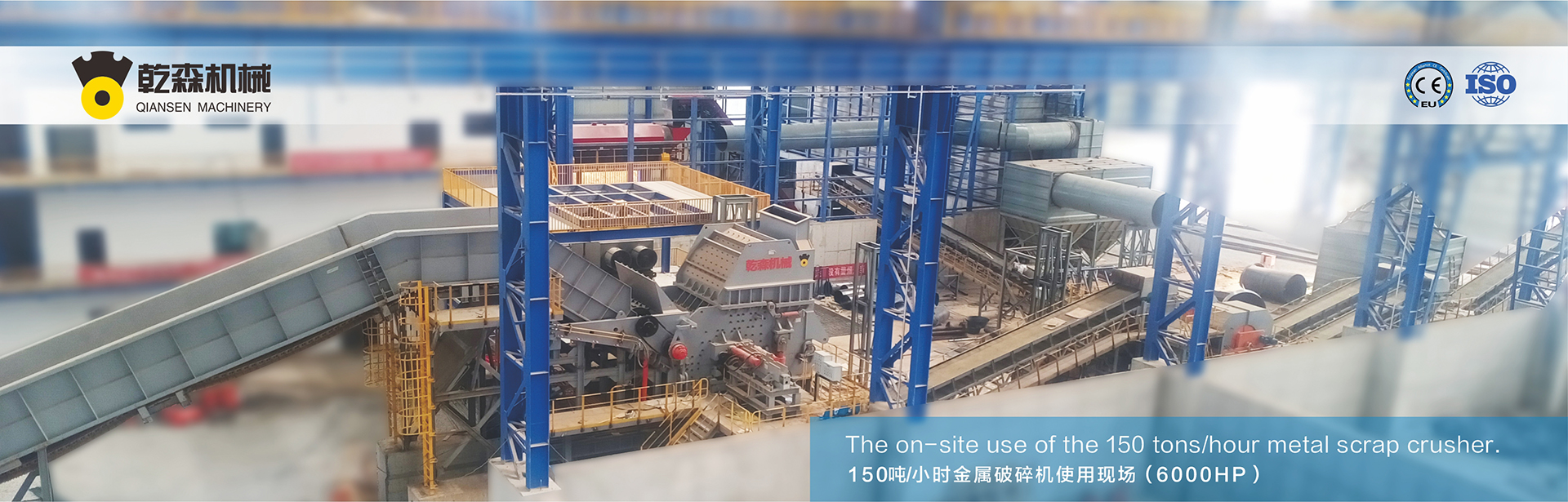
Scrap recovery and secondary metallurgy depend entirely on mechanical size reduction to transform bulky, heterogeneous scrap into uniform, furnace-ready commodities. Within high-volume processing yards, deploying an industrial heavy metal shredder establishes the foundation for downstream sorting, densification, and de-pollution. Processing materials ranging from end-of-life vehicle (ELV) chassis and white goods to heavy structural plate requires machinery capable of generating immense shearing, tearing, and crushing forces while withstanding severe dynamic loading. Achieving predictable throughput and acceptable cost per processed ton demands an in-depth understanding of mechanical drives, metallurgical wear mechanisms, structural dynamics, and material separation physics.
Core Drive Train Mechanics: Electromechanical vs. Hydrostatic Systems
The operational efficiency of scrap reduction depends primarily on the transmission of shaft torque and the drive system's ability to absorb shock loads without catastrophic failure. When selecting a drive train, engineering teams evaluate two primary configurations: direct electromechanical gear-driven systems and variable-displacement hydraulic drives.
Electromechanical drive packages utilize high-torque electric motors coupled to planetary gearboxes via fluid couplings or torque-limiting clutches. These systems deliver electrical-to-mechanical conversion efficiency rates typically exceeding 92%. In facilities where incoming scrap streams maintain consistent thickness and predictability, electromechanical drives offer stable operational economics. Fluid couplings dampen the torsional vibrations transmitted back into the motor windings when the cutters engage dense structural steel sections. However, sustained shock loads from oversized unshreddables risk gear tooth pitting, shaft deflection, and gearbox housing deformation unless rapid reverse-rotation protocols are programmatically hardcoded into the programmable logic controller (PLC).
Hydrostatic systems utilize high-displacement axial piston motors directly mounted to the shredder shafts, driven by remote hydraulic power units (HPUs). Hydraulic architecture provides instantaneous torque multiplication at zero rotor speed, enabling unjamming cycles without drawing severe electrical inrush currents from the facility substation. Hydrostatic transmission eliminates mechanical gearboxes, replacing physical gear meshes with hydraulic oil that serves as an intrinsic dampener against severe shock loads. System designers calculate hydraulic pressure spikes through high-speed transducers, diverting fluid through proportional relief valves within milliseconds of encountering refractory materials. Engineering teams like QianSen design drive trains with integrated shock relief circuits that minimize mechanical fatigue on structural chassis while maintaining torque delivery across variable material densities.
Metallurgy, Cutter Geometries, and Fracture Dynamics
Tool performance determines operational expenditure in high-abrasion environments. Shredder knives, anvils, and breaker bars operate under simultaneous exposure to high impact, three-body abrasive wear, and localized thermal spikes caused by plastic deformation of the scrap. Specifying the correct tool steel alloy requires balancing fracture toughness against surface hardness.
Forged Alloy Steels (e.g., 42CrMo, NiCrMo Alloys): Favored for high-impact shearing rotors where knife breakage poses a greater operational hazard than gradual abrasive wear. Through-hardened to 52–56 HRC, these alloys resist brittle fracturing under irregular compressive stresses, though they require routine build-up welding to maintain cutting profiles.
High-Manganese Austenitic Steels (Hadfield Steels): Containing roughly 11% to 14% manganese, these materials exhibit high work-hardening capabilities. While the core retains extreme ductility (absorbing heavy kinetic shocks without cracking), the contact surface hardens from approximately 200 HB to over 500 HB under mechanical impact. Manganese is particularly effective in hammer-type configurations handling malleable, heavy-gauge steel scrap.
Tool Steels with Carbide Inlays: In applications involving pre-sorted sheet scrap, secondary aluminum, or electrical motor shearing, specialized composite knives with tungsten carbide or high-chromium tool steel inserts preserve sharp shearing edges, lowering electrical consumption by maintaining precise knife-to-anvil clearances.
Knife geometry dictates whether scrap undergoes clean ductile shearing, tensile tearing, or compressive compaction. Hook profile, rake angle, and cutting edge thickness dictate energy consumption per ton. Multi-hook designs secure purchase on rounded profiles such as engine casings and pipe sections, pulling them down into the cutting bed. Single-hook or low-profile cutters generate localized shear stresses exceeding the ultimate tensile strength of the input metal, resulting in smaller, uniformly sheared fragments. Through technical collaboration with QianSen, operators can specify custom knife configurations and hardened alloy spacers tailored to specific feedstock profiles, minimizing rotor deflection under asymmetrical lateral loading.
Input Streams, Bulk Densities, and Rotor Sizing
Scrap yards process varied input streams, each presenting distinct mechanical challenges. Selecting the correct machine envelope requires matching rotor diameter, shaft center distance, and cutting chamber volume to the physical dimensions and tensile properties of the anticipated feedstock.
Baled light iron, white goods, and automotive sheet metal present high volume but relatively low material density. These feedstocks require large-diameter, aggressive hook rotors to pull bulky packages into the cutting zone without allowing the scrap to ride on top of the rotating elements. Shredding these materials generates high-density fragments through a combination of shearing and rapid localized folding, often requiring open-bottom shredding chambers configured with classification grates to ensure output sizing conforms to downstream furnace feeding requirements.
Heavy melting scrap (HMS 1 and HMS 2), demolition steel, rebar bundles, and industrial off-cuts demand an entirely different mechanical profile. Rotor speeds must operate at lower revolutions per minute—typically between 12 and 35 RPM for dual-shaft shear designs—to generate the high static torque necessary to initiate plastic shearing failure. For these applications, shaft diameters must withstand severe cyclical bending moments. Engineers compute shaft deflection tolerances down to fractions of a millimeter to prevent internal tool-face rubbing, which can rapidly gall knife edges and elevate bearing temperatures beyond safe running thresholds.
Downstream Separation Architecture and Plant Layout
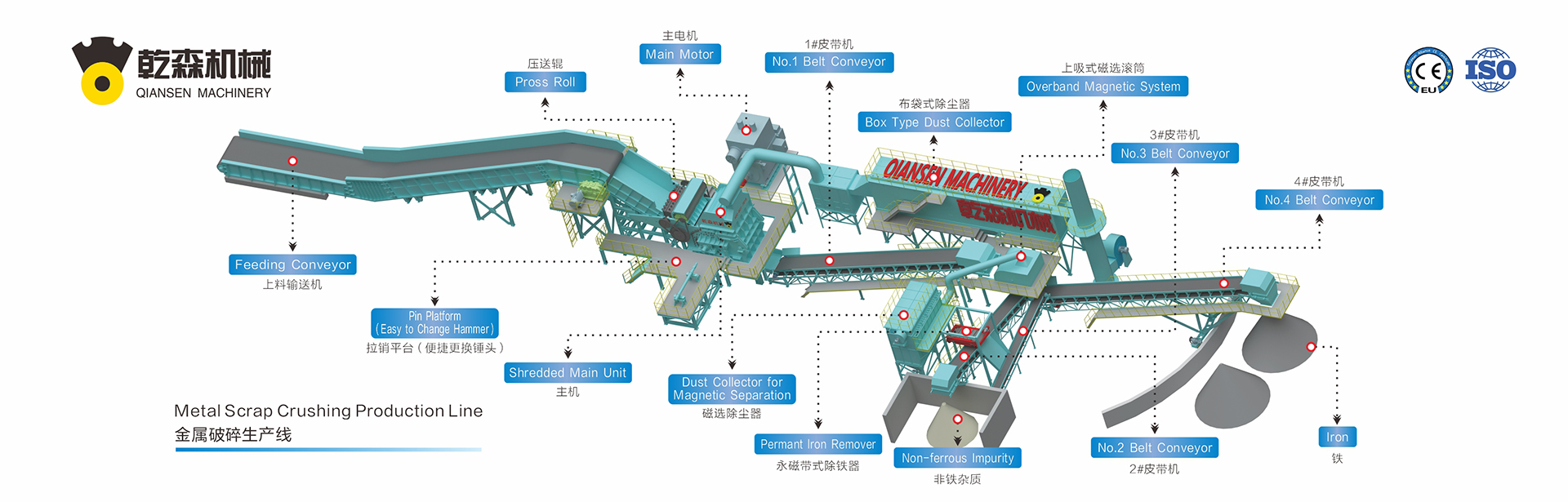
Sizing a heavy metal shredder requires balancing upstream processing power with downstream sorting line capacity to prevent line choke-points. The discharge stream exiting the shredder consists of a heterogeneous mix of ferrous fragments, non-ferrous metals, shredded insulation, plastics, rubber, glass, and iron-oxide fines. Plant architecture must cleanly isolate high-purity revenue streams while protecting downstream separation equipment from mechanical damage caused by oversized metal shards.
The direct discharge zone beneath the shredder chamber must absorb the kinetic impact of falling, irregularly shaped metal fragments. Heavy-duty vibratory feeder pans lined with replaceable wear plates (such as quenched and tempered abrasion-resistant steel) spread the discharged mass into an even, single-particle-depth material bed. Spreading the scrap stream is necessary to optimize downstream sensor detection and magnetic extraction efficiencies.
Overband Cross-Belt Magnetic Separators: High-gradient electro-magnets or permanent neodymium magnets positioned over the vibratory discharge pull tramp ferrous scrap from the bed. Deep-field magnetic configurations ensure retrieval of heavy iron castings embedded beneath light non-ferrous materials.
Magnetic Drums: Operating at the head pulley of subsequent conveyor transfers, magnetic drums deliver secondary ferrous capture, cleanly separating clean, dense ferrous scrap from non-magnetic shredder residue (fluff).
Air Classification Systems: Zig-zag air classifiers or cascade separators introduce counter-current airflow to draw off light fractions (foams, plastics, dust, lightweight wire) prior to non-ferrous recovery, protecting sorting sensors and reducing abrasive wear on downstream sorting equipment.
Eddy Current Separators (ECS): High-speed eccentric rotor designs produce rapidly alternating magnetic fields that induce internal eddy currents within non-ferrous particles. The resulting repulsive Lorentz forces physically project aluminum, copper, and brass fragments over a separation splitter, away from inert non-metallic residues.
Structural Integrity, Vibration Mitigation, and Civil Foundations
The mechanical forces generated within the cutting chamber do not dissipate in the scrap alone; dynamic reaction forces transfer directly into the machine chassis, structural support legs, and underlying concrete slab. Structural resonance, if left unchecked, accelerates weld fatigue, misaligns shaft couplings, and causes premature spalling in spherical roller bearings.
Machine frames require fully stress-relieved, welded heavy-plate box constructions. Reinforcing gussets and internal ribbing distribute localized torsional stresses throughout the entire base footprint. Critical shear interfaces utilize precision-machined keys and fitted bolts rather than standard clearance bolts, preventing micro-motion between bearing housings and machine side walls under heavy shock loads.
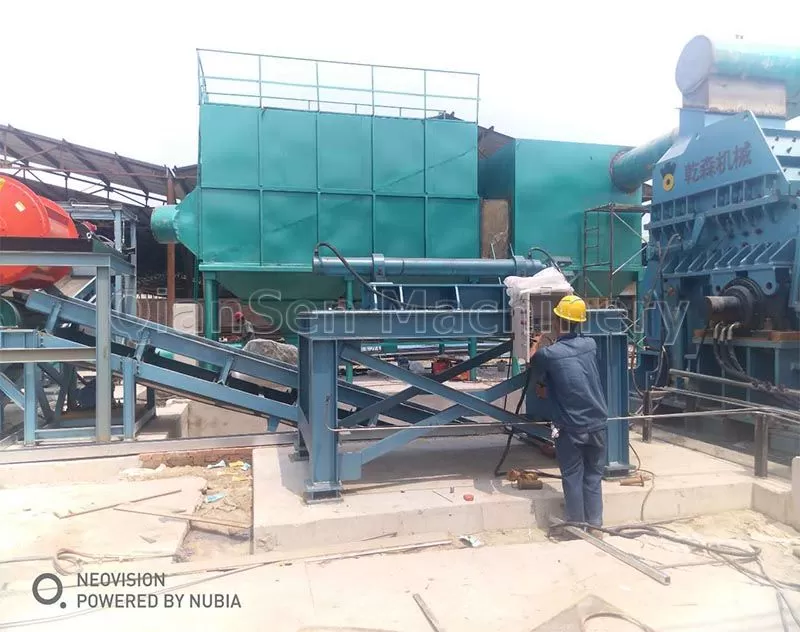
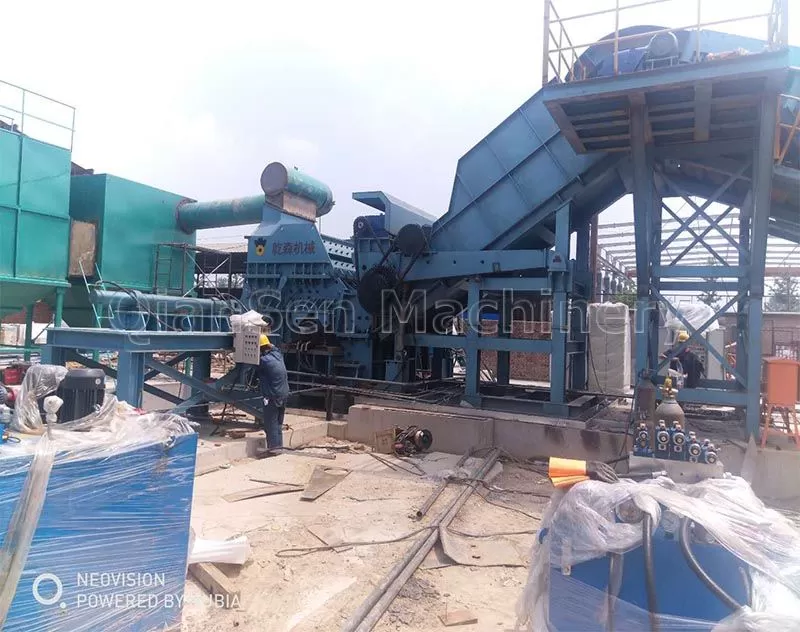
Civil engineering foundations must accommodate both static machinery weight and severe dynamic load factors. Heavy shredder installations incorporate isolated, reinforced concrete foundation pads decoupled from the main plant building floor slab. Industrial elastomeric or spring-damper vibration isolation packages are positioned beneath the main chassis mounting points to attenuate low-frequency harmonics generated during rotor unjamming cycles. Engineering consultations with QianSen assist plant designers in conducting vibration analysis, helping align foundation mass, anchor bolt patterns, and frame damping specifications with specific site soil load-bearing capacities.
Preventive Maintenance Regimes and Operational Reliability
Operational profitability in scrap processing correlates directly with machine availability. An unplanned stoppage caused by shaft seizure, gearbox tooth shear, or chamber breach quickly erodes processing margins. Implementing rigorous condition monitoring systems enables maintenance managers to shift from reactive failure repairs to planned, predictive interventions.
Lubrication protocols represent the first line of defense for heavy rotating assemblies. Spherical roller bearings supporting main rotor shafts require automated grease injection systems capable of delivering high-viscosity, extreme-pressure (EP) synthetic lubricants fortified with solid additives like molybdenum disulfide. These lubricants maintain an elastohydrodynamic film layer under conditions of near-zero rotation and extreme radial loads. Automatic systems must monitor line pressure to detect broken lubrication lines or clogged bearing ports immediately.
Sustained throughput on any heavy metal shredder depends heavily on strict adherence to knife gap tolerances. Side clearances between interleaved cutters must be inspected via feeler gauges during scheduled shift shutdowns. As lateral wear occurs, shaft assemblies require re-shimming or axial pre-load adjustments to re-establish design clearances. Allowing cutter clearance to widen causes the shredder to pinch and tear ductile sheet scrap rather than shear it cleanly. This inflates drive motor amp draw, accelerates thermal build-up within the hydraulic or electrical drive, and drastically increases wear plate scouring.
| Inspection Interval | Component / Subsystem | Action and Acceptance Criteria |
|---|---|---|
| Daily (Pre-Shift) | Cutter Pocket & Anvil Bed | Inspect for jammed unshreddables, tool edge micro-cracking, and missing hardware. Clear wedged debris. |
| Daily (Continuous) | Bearing & Hydraulic Fluid Telemetry | Monitor bearing operating temperatures (limit: <85°C) and hydraulic oil contamination/temperature levels. |
| Weekly (40-50 Hours) | Knife-to-Anvil Clearances | Measure mechanical tolerances with feeler gauges. Verify lateral axial play conforms to original clearance tables. |
| Monthly (200 Hours) | Chassis Fasteners & Weld Seams | Check torque on structural anchor bolts, bearing pedestal caps, and drive mounting assemblies. Ultrasonic crack testing on critical joints. |
| Quarterly (600 Hours) | Drive Train & Gearbox Fluid | Perform spectral oil analysis on gearbox lubricants to identify microscopic iron, bronze, or chromium wear particulates. |
Capital Expenditure, Operating Cost per Ton, and ROI Modeling
Procuring a commercial heavy metal shredder requires balancing upfront capital expense against total lifecycle cost per ton. The initial investment covers machinery, drive systems, civil foundation works, electrical switchgear expansion, air quality filtration systems, and downstream sorting lines. However, operational expenditures over the equipment's lifespan often outweigh the initial machinery purchase price.
Operating expenditure breaks down into electrical energy consumption (measured in kilowatt-hours per ton), wear part consumption (cost of replacement steel, hardfacing wire, and technician labor), and regular preventive maintenance overhead. Selecting an undersized machine running near its mechanical limits dramatically increases the incidence of overload-induced component failure, elevating wear part consumption per ton of throughput. Conversely, an oversized shredder operating under capacity underutilizes capital and lowers electrical motor efficiency due to poor power factors during low-load idling.
Achieving rapid return on investment relies on increasing the bulk density and purity of the sorted output scrap. Dense, clean ferrous scrap—sheared to uniform dimensions under 150 mm and largely free of copper contamination—commands substantial market premiums from secondary steel mills and basic oxygen furnace operators. Mills pay higher rates for furnace-ready scrap because it reduces melt times, lowers refractory lining wear, and minimizes slag generation. Calculating total cost of ownership allows procurement engineers to evaluate how advanced rotor geometries and high-alloy knives recover their capital premiums through extended wear life, continuous run cycles, and higher-grade output commodities.
Frequently Asked Questions
Q1: What mechanical factors dictate whether to select an
electromechanical or hydraulic drive for scrap reduction?
A1:
Electromechanical drives offer superior electrical-to-mechanical conversion
efficiency and lower mechanical complexity, making them suitable for uniform
scrap profiles where catastrophic shock loads are minimal. Hydraulic drives are
preferred when processing mixed, baled, or unpredictable scrap streams
containing oversized tramp metal. They deliver continuous high torque at low
speeds and absorb severe shock loads via fluid relief valves without damaging
mechanical components.
Q2: How do processing yards effectively handle unshreddable tramp
iron?
A2: Modern shredders utilize high-speed PLC-monitored
telemetry to protect internal components. When a tool encounters an unshreddable
solid mass (such as an engine crankshaft or solid steel billet), the resulting
pressure spike or motor current surge triggers an instantaneous rotor reverse
sequence within milliseconds. In systems equipped with hydraulic discharge
aprons or tramp-metal ejection doors, the reverse cycle redirects the unyielding
object toward an ejection path, clearing the cutting chamber without prolonged
downtime.
Q3: What causes excessive lateral cutter wear and edge
rounding?
A3: Accelerated cutter degradation stems primarily from
two conditions: processing contaminated scrap laden with silica, glass, or
refractory dust (which accelerates three-body abrasive wear), or operating the
shredder with widened knife gaps. When axial knife clearances exceed specified
limits, material wedges between rotating and stationary tools rather than
shearing. This generates lateral thrust loads that bow the shaft, rapidly
abrading tool flanks and overheating the assembly.
Q4: Why is input material preparation critical prior to primary
shredding?
A4: While heavy shredders possess significant mechanical
power, feeding intact fuel tanks, closed pressurized cylinders, or thick
structural beams poses severe risks. Pressurized vessels risk explosion under
high shearing forces, while massive solid cross-sections can exceed the yield
strength of the shredder shaft. Basic pre-sorting, depollution, and shearing
oversized lengths with an upstream scrap shear preserves rotor health, protects
personnel, and prevents downstream operational stoppages.
Q5: What civil structural considerations are required before
installation?
A5: Civil installation requires detailed structural
calculations based on static weight, dynamic impact coefficients, and soil
mechanics. The foundation slab typically requires reinforced, high-strength
concrete resting on deep piles if the subsoil exhibits settling tendencies.
Isolation joints must decouple the shredder pad from nearby structural
foundations to prevent the transmission of low-frequency vibrations that could
crack neighboring masonry or misalign sensitive downstream sorting sensors.
Engineering Consultation and System Integration
Optimizing secondary scrap operations requires selecting machinery configured for your precise feedstock characteristics, plant electrical limits, and output specifications. QianSen engineers provide detailed technical reviews of scrap yard processing layouts, matching rotor profiles, planetary drive gear ratios, and downstream sorting lines to specific operational goals. Contact the technical application team at info@scrapcrusher.com to review engineering schematics, request comprehensive equipment documentation, or schedule a formal review of your upcoming scrap processing installation.