





High-Torque Steel Drum Shredder Machinery: Sizing and Scrap Volume Reduction
Released on Aug. 24, 2026
Hollow container scrap presents distinct volumetric and mechanical hurdles within the metal recycling and industrial waste sectors. Standard 55-gallon (200-liter) steel barrels, whether open-head or tight-head, combine thin sheet metal walls (ranging between 0.9 mm and 1.5 mm) with heavy structural reinforcement along the chimes and rolling hoops. Transporting intact barrels is economically inefficient due to low bulk density, often yielding less than 100 kilograms per cubic meter in a standard shipping container. Processing these vessels requires heavy-duty size reduction machinery capable of collapsing, piercing, and shearing high-tensile carbon steel without stalling drive systems or creating uneven mechanical wear.
Implementing a dedicated steel drum shredder directly resolves bulk transport inefficiencies by increasing scrap bulk density by up to 800 percent. Achieving consistent reduction requires a detailed understanding of drive train mechanics, cutter geometry, alloy selection, and automated feed integration. Scrap yards and chemical processing facilities must match machine specifications to their precise input stream to balance throughput demands, power consumption, and long-term cutter maintenance cycles.
Mechanical Configuration of Dual-Shaft Industrial Shredders
Twin-shaft rotary shear shredders represent the industry standard for processing empty and contaminated steel vessels. Unlike high-speed hammer mills that rely on kinetic impact and generate significant airborne dust and thermal spikes, low-speed, high-torque dual-shaft units operate on a scissor-cutting principle. The shafts rotate counter-directionally at low rotational speeds—typically between 10 and 25 revolutions per minute—delivering immense shearing force directly to the contact point of the drum wall.
The operational cycle begins when the rotating cutter hooks grab the cylindrical body of the barrel, pulling it downward into the cutting chamber. The compression forces flatten the hollow container before the interleaving blades shear the rolled sheet metal, lid seams, and bottom rim into uniform strips. The width of the resulting scrap is determined by the thickness of the cutter discs, while the length corresponds to the spacing and number of hooks machined onto each rotary blade.
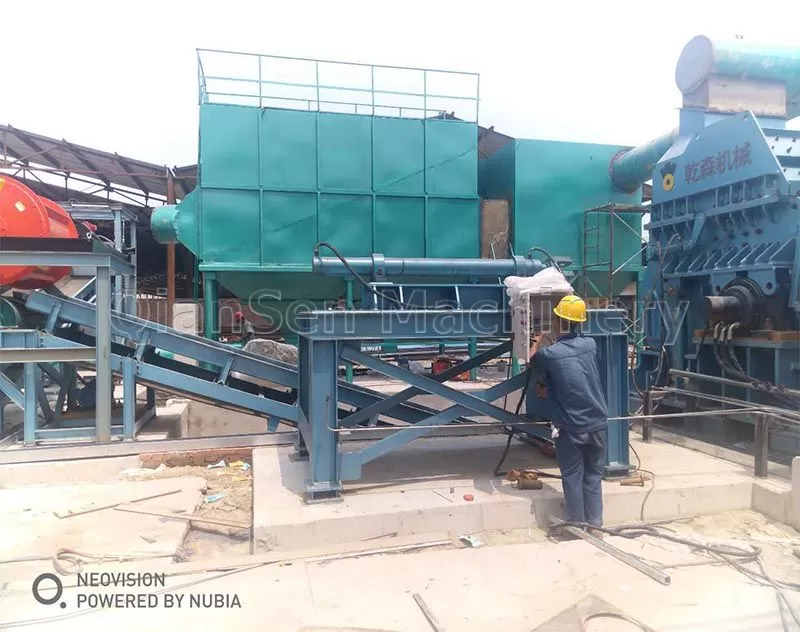
Engineers at QianSen design shredding systems with rigid structural frames to absorb the cyclic shock loads inherent in shearing triple-seamed container chimes. Fabricated from heavy, stress-relieved structural steel plates, these machine housings maintain shaft alignment under peak bending loads, preventing internal gear bind and reducing premature bearing degradation.
Cutter Metallurgy and Geometry for Metal Barrel Processing
The cutting assembly represents the primary wear interface and dictates long-term operating costs. Steel drums are manufactured from cold-rolled carbon steel, but they frequently incorporate reinforced rings and high-strength chime seams that exert substantial point loads on cutting edges. Cutter discs must possess high core toughness to resist impact fractures while maintaining surface hardness to resist abrasive and adhesive wear.
Alloy Compositions: Premium cutters are forged from high-alloy tool steels such as D2 (Cr12MoV), 55SiCr, or proprietary nickel-chromium-molybdenum alloys. These materials undergo precision vacuum heat treatment, achieving a tempered hardness between 56 and 60 HRC.
Hook Profiles: Multi-hook profiles (ranging from one to four hooks depending on chamber diameter) govern aggressive intake. For round steel drums, a pronounced hook geometry is necessary to puncture the curved wall and prevent the barrel from floating or bouncing atop the rotating shafts.
Interlocking Spacers: Hardened spacer rings positioned between the cutters maintain precise lateral clearances. Tight axial tolerances prevent thin drum sheet metal from slipping between the blades, which can cause material jamming and shaft deflection.
Surface Rebuilding: In heavy-duty scrap operations, hardfacing alloys applied via submerged arc welding allow maintenance crews to rebuild worn blade tips without dismounting the entire shaft assembly, reducing planned downtime.
Drive Train Sizing and Torque Dynamics
Overcoming the structural resistance of reinforced chimes requires substantial torque rather than raw rotational speed. Dual-shaft systems utilize heavy-duty electric motors or radial-piston hydraulic drives coupled with high-reduction planetary gearboxes. Planetary gear units are selected for their compact footprint, high shock-load tolerance, and high mechanical efficiency under continuous load variations.
When selecting a steel drum shredder for medium-to-large scrap yards, the ratio between electric motor power and drive torque directly dictates processing reliability. A dual-motor drive delivering independent power to each shaft allows independent speed regulation. This setup enhances the machine's ability to free itself during minor bridging events by momentarily reversing one shaft while the other continues processing.
Programmable Logic Controllers (PLCs) monitor motor current draw across every phase. When a structural anomaly—such as a thick forging or an over-gauge reinforcing band—induces a current spike above the programmed threshold, the system initiates an automated sequence: stopping the shafts, reversing rotation for a set number of seconds to re-orient the drum, and resuming forward shredding. This automated overload protection protects the gearbox teeth and drive splines from catastrophic failure.
Plant Integration: From Infeed Automation to Smelter Feed
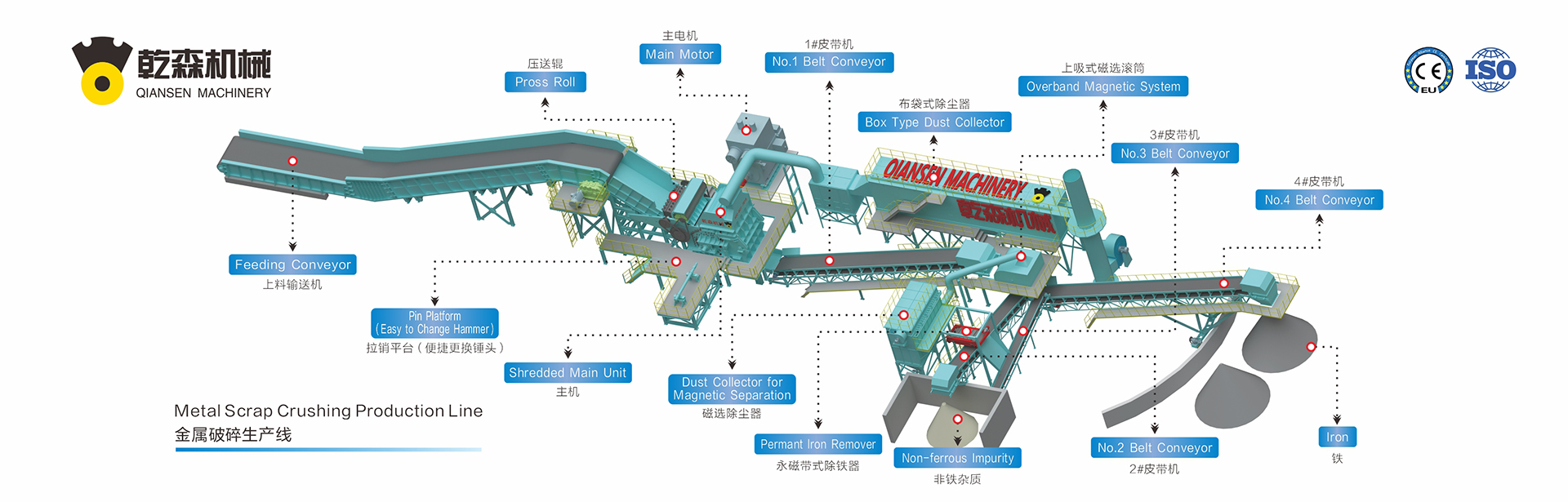
A shredder rarely operates as an isolated machine; it serves as the core node in a continuous processing line. Seamless integration with upstream feeding mechanisms and downstream classification equipment ensures steady throughput and minimizes manual intervention in scrap yards.
Automated Feeding Systems
Direct manual loading of heavy steel drums poses safety issues and yields erratic chamber feeding. Hydraulic bin tippers, custom-designed to lift 200-liter drums directly into the infeed hopper, maintain consistent volumetric loading. In high-capacity plants, inclined heavy-duty steel apron conveyors transport drums continuously into an enclosed hopper equipped with hydraulic hold-down devices that force floating barrels directly into the cutter path.
Downstream Separation and Sizing
Once shredded, the ferrous scrap discharges onto a heavy-duty vibratory feeder or belt conveyor. Magnetic overband separators extract the shredded steel strips from internal debris or synthetic liners. Facilities requiring smaller, uniform chips for direct electric arc furnace (EAF) charging often route the primary shredder output through a secondary shredder or heavy-duty granulator, reducing the material to a dense, flowable 20 mm to 50 mm fraction.
QianSen designs fully integrated lines where the steel drum shredder is paired with specialized air classification and liquid collection systems to accommodate drums that previously held oils, greases, or non-flammable industrial coatings.
Environmental and Safety Engineering in Drum Processing
Repurposing or recycling drums derived from the chemical, petroleum, and manufacturing industries involves managing residual chemicals, volatile organic compounds, and fire hazards. Modern recycling systems incorporate multiple layers of active and passive engineering controls to protect equipment and surrounding infrastructure.
Explosion Suppression and Venting: When handling closed-head drums with unknown past contents, shredder chambers can be fitted with nitrogen inerting systems to depress oxygen levels below the lower explosive limit (LEL). Top hoppers often feature heavy rubber containment curtains and certified explosion relief panels directed away from operator walkways.
Fluid Containment Basins: The base frame beneath the shredder chamber incorporates an integrated, sloped collection sump constructed from corrosion-resistant steel. Any residual lubricants or liquid residues drained during the piercing and shearing process flow directly into dedicated drainage ports for hazardous waste containment.
Bearing and Seal Isolation: Abrasive dust, metallic fines, and corrosive chemical residues can migrate into drive components. Heavy-duty drum shredding machines locate the main spherical roller bearings completely outside the cutting chamber, separated by multi-layer labyrinth seals and mechanical packing glands. This external arrangement prevents fluid contamination from entering bearing housings.
Evaluation Metrics for Industrial Equipment Acquisition
Specifying shredding equipment requires balancing mechanical capabilities with total life-cycle costs. Operational efficiency is governed by structural integrity, electrical demand per ton of processed scrap, and ease of cutter maintenance.
Recycling operators must evaluate the cutting chamber dimensions against the maximum outer diameter of their drum inventory. For standard 55-gallon drums, a chamber opening of at least 1000 mm by 800 mm is necessary to prevent bridging at the hopper throat. Furthermore, nominal shaft diameter, hex-drive sizing, and bearing load ratings must be evaluated against the maximum expected tensile strength of high-strength industrial containers.
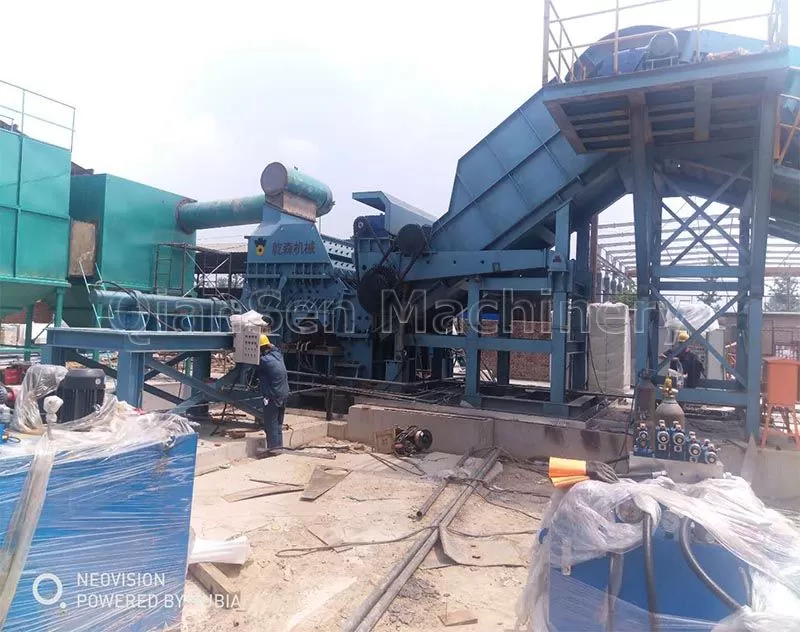
The manufacturing expertise of QianSen provides industrial processors with heavy-duty structural configurations designed for continuous, multi-shift scrap processing. High-torque drive packages, hardened structural cutters, and accessible maintenance panels minimize operating expenditures per ton of processed scrap.
Frequently Asked Questions
How does a dual-shaft machine handle closed-head steel drums?
Closed-head drums contain trapped air that can resist compression. The high-profile hook geometry on the primary cutter discs pierces the outer skin of the drum immediately upon contact. This initial puncture relieves internal air pressure, allowing the low-speed, high-torque shafts to pull the collapsed barrel into the counter-rotating blades for complete shearing.
What is the typical wear life of shredder blades when processing industrial drums?
Blade life varies based on drum wall thickness, presence of contamination, and daily operating hours. Premium alloy blades such as D2 or heat-treated Cr12MoV operating on clean carbon steel drums typically achieve 1,200 to 2,000 hours before requiring edge rebuilding or rotation. Processing drums containing abrasive residues or reinforced structural bands will shorten these intervals, necessitating strict scheduled maintenance.
Can an industrial steel drum shredder process containers with residual fluids?
Yes, provided the machine is engineered with external bearing housings, liquid-tight labyrinth seals, and a lower drip collection pan. If residual contents include flammable vapors, the entire system must be customized with spark-detection sensors, inert gas purging systems, and explosion-proof motors certified under appropriate industrial safety codes.
What motor power is required to achieve a throughput of 60 to 120 drums per hour?
Processing 60 to 120 standard 200-liter drums per hour generally requires a dual-shaft system driven by twin electric motors totaling 37 kW to 75 kW (50 HP to 100 HP), or an equivalent hydraulic power unit. Larger throughput capacities or requirements for dense, small-fraction shredding necessitate higher power packages, up to 110 kW or more.
How does scrap output size impact the transport cost and smelting value?
Intact drums occupy excessive volume with minimal weight, making long-distance transport economically unfeasible. Shredding reduces container volume by up to 80 percent, allowing transport vehicles to reach maximum payload weight limits. For smelters, shredded and magnetically sorted steel scrap provides a higher bulk density, lower melt loss, and more efficient furnace charging compared to baled or whole containers.
How do automated reverse functions protect the gearbox and shaft assembly?
When uncrushable tramp metal or heavy structural steel enters the chamber, the electric current to the motor spikes. The PLC detects this spike within milliseconds and reverses the shaft rotation direction for a brief cycle. This action clears the jam from the cutting teeth, repositions the object, and re-engages forward motion, preventing mechanical shock from damaging the planetary gearbox teeth or twisting the main shafts.
System Sizing and Project Consultation
Configuring a profitable metal scrap processing system requires exact alignment between your daily volume targets, drum specifications, and facility power availability. Our engineering team analyzes your operational throughput requirements, container contamination levels, and target scrap dimensions to deliver robust, high-performance machinery. Contact our application engineers today to discuss your technical parameters, request detailed equipment drawings, and receive a formal project quotation tailored to your recycling infrastructure.
Previous:
None