





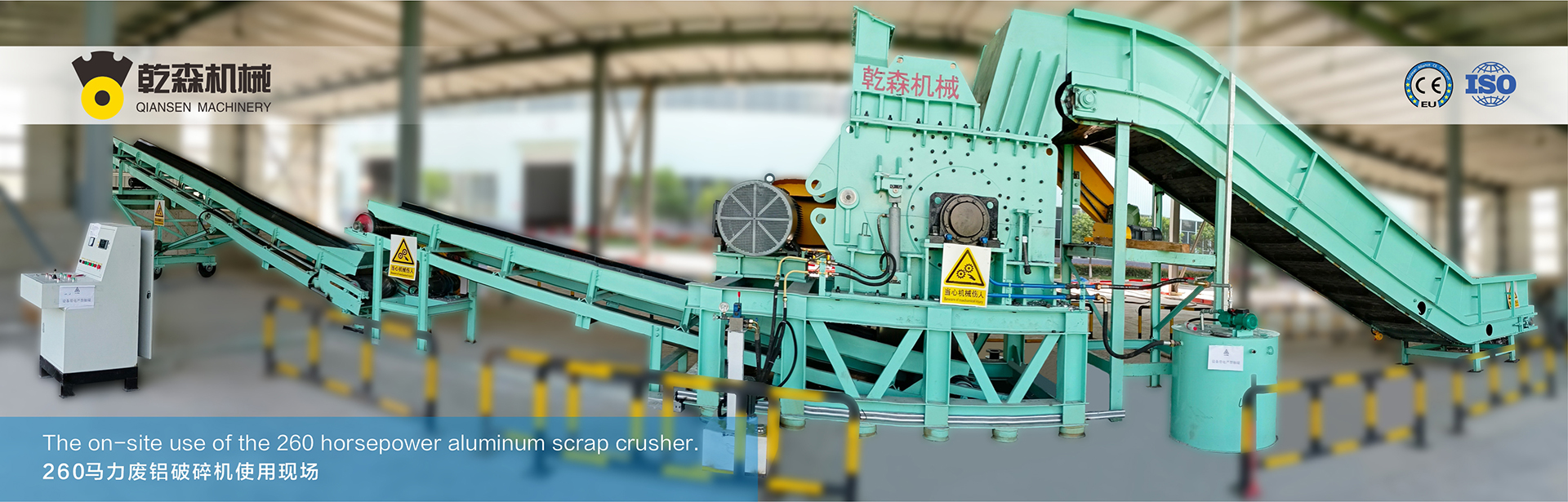
Industrial Shredder for Aluminum Cans: Engineering, Sizing, and Melt Yield
Released on Aug. 21, 2026
Used beverage cans (UBC) represent one of the highest-volume scrap fractions in the secondary aluminum industry. Composed primarily of AA3004 in the drawn-and-ironed body and AA5182 in the end tab, these thin-gauge alloys possess high economic value when processed back into rolling ingot. Transforming loosely collected or high-density baled cans into a clean, uniform scrap feed requires dedicated mechanical processing. Selecting an industrial shredder for aluminum cans dictates the recovery rate, bulk density, and thermal efficiency of subsequent remelting operations.
Secondary smelters and large-scale recyclers demand precise volumetric reduction. Processing post-consumer cans introduces complex operational variables, including liquid contamination, tramp ferrous metals, high paint-to-metal ratios, and abrasive dirt. An engineered processing line balances torque, knife wear life, and downstream liberation to maximize throughput while minimizing furnace melt loss.
Metallurgical Considerations and Shred Geometry in UBC Processing
Aluminum cans have a high surface-area-to-mass ratio. When introduced to a remelting furnace, exposed aluminum surfaces readily oxidize, forming aluminum oxide (dross). Excessive dross generation decreases metal yield and increases operational expenses for salt fluxes. The geometry of the shredded scrap directly influences how the scrap behaves in the furnace melt vortex or rotary furnace.
A properly configured shredder for aluminum cans produces a dense, distinct fragment rather than compressed folds or micro-particulates. If the fragment size is too fine, high-velocity furnace draft systems carry scrap into the baghouse, resulting in pure metal loss. Conversely, if fragments are too large or baled too tightly, trapped air and moisture create thermal inefficiencies and potential pressure hazards inside submerged melt furnaces.
Target Fragment Size: Most secondary casthouses specify a shredded fragment size between 25 mm and 75 mm (1 to 3 inches). This profile guarantees fast submergence in molten metal vortices while allowing automated de-coating systems to remove lacquer and print ink.
Bulk Density: Effective size reduction increases bulk density from 30–50 kg/m³ (loose uncompacted cans) to approximately 350–550 kg/m³, allowing standard charge wells to accept maximum mass per cycle.
Coating Liberation: Shearing and tearing actions break the surface tension of exterior coatings, enabling hot air circulation in thermal de-lacquering kilns to access both sides of the sheet alloy.
Core Shredding Technologies: Dual-Shaft Shears vs. Hammer Mills
Scrap yards and processing centers select machine configurations based on inbound material states (loose collections, loose briquettes, or high-density export bales) and final foundry specifications. Two primary machine architectures dominate the market.
Low-Speed, High-Torque Dual-Shaft Rotary Shears
Dual-shaft shear machines utilize two counter-rotating shafts equipped with interleaved, hook-profile cutting blades. Driven by planetary gearboxes coupled to high-displacement hydraulic drives or high-efficiency electric motors with variable frequency drives (VFD), these units cut through UBC bales using high shearing forces at low rotational velocities (typically 15 to 35 RPM).
Because these systems operate at low speeds, dust generation and metal fine formation remain exceptionally low. The slow-speed mechanism reduces mechanical stress, minimizes noise levels, and avoids ignition of residual VOCs or flammable liquids often found inside unwashed post-consumer cans. Dual-shaft shredders excel as primary breakdown units, capable of taking high-density bales (weighing up to 800 kg) and reducing them to large, manageable strips for secondary refining.
High-Speed Impact Hammer Mills and Vertical Crushers
Hammer mills employ high-speed rotors (ranging from 600 to 1200 RPM) fitted with free-swinging or fixed manganese steel hammers. As cans enter the chamber, the kinetic energy of the rotating hammers shatters and folds the thin aluminum against heavy breaker plates and discharge grates.
Impact-based processing strips paint, delaminates dirt, and compresses shredded pieces into rounded "popcorn" or "nugget" profiles. This geometry provides high bulk density and smooth material conveyance. High-speed impact mills require robust tramp metal ejection systems to prevent chamber destruction when uncrushable steel objects enter the stream.
Rotary Cutter Metallurgy, Blade Geometry, and Wear Resistance
Scrap aluminum contains abrasive contaminants such as silica, road grit, glass, and trace steel fasteners. Cutting tools encounter continuous abrasive and adhesive wear during operation. Equipment manufacturers like QianSen select tool steel grades based on impact toughness and edge retention under abrasive conditions.
Alloy Tool Steels: For dual-shaft shears, blades are precision-machined from forged AISI D2, 1.2379, or specialized modified chrome-molybdenum tool steels, hardened through vacuum heat treatment to 56–60 HRC. This hardness maintains sharp cutting edges against thin-gauge aluminum sheet.
Impact Steels: Hammer mills utilize high-manganese steel (Hadfield steel with 12–18% Mn) or forged Ni-Cr-Mo alloy steels. Manganese steels work-harden during impact, forming a hard outer wear layer while maintaining a ductile core to absorb shocks from tramp contaminants.
Blade Hook Profiles: Hook profiles range from single-hook designs for dense bales to multi-hook configurations for loose cans. The hook draws the material into the cutting gap, while the width of the cutter determines the primary dimension of the output scrap.
Wear Liners: Shredding chambers feature bolted, replaceable wear plates fabricated from Hardox 450/500 or equivalent abrasion-resistant steels to protect the main structural housing from wall erosion.
Integration of an Industrial Shredder for Aluminum Cans into Automated Lines
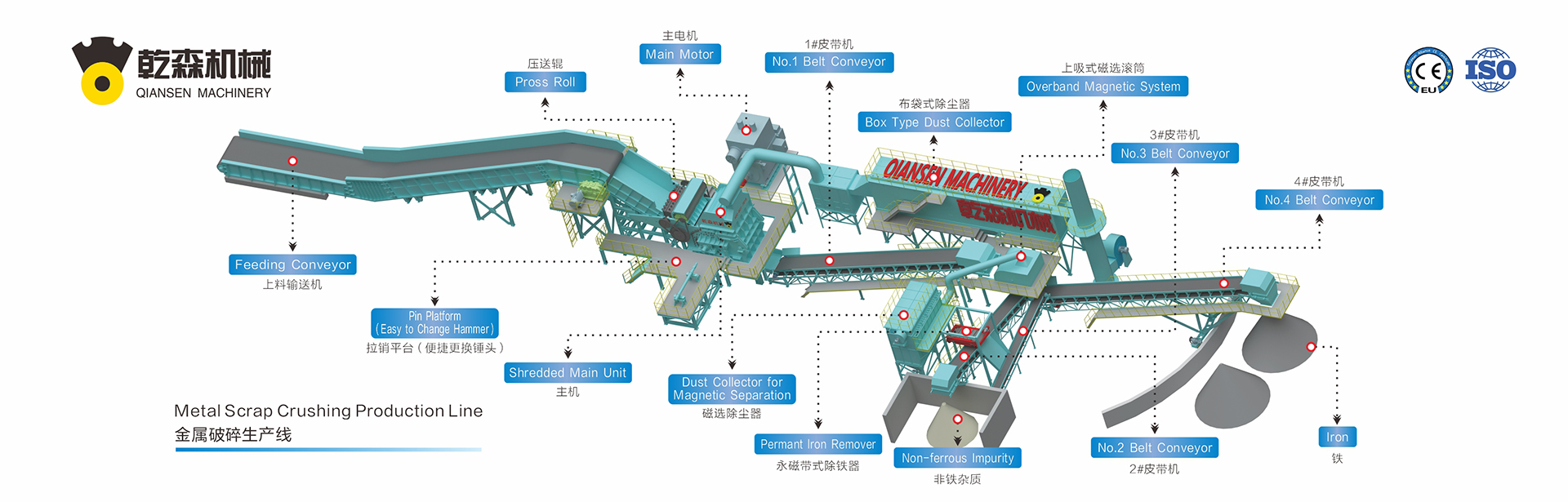
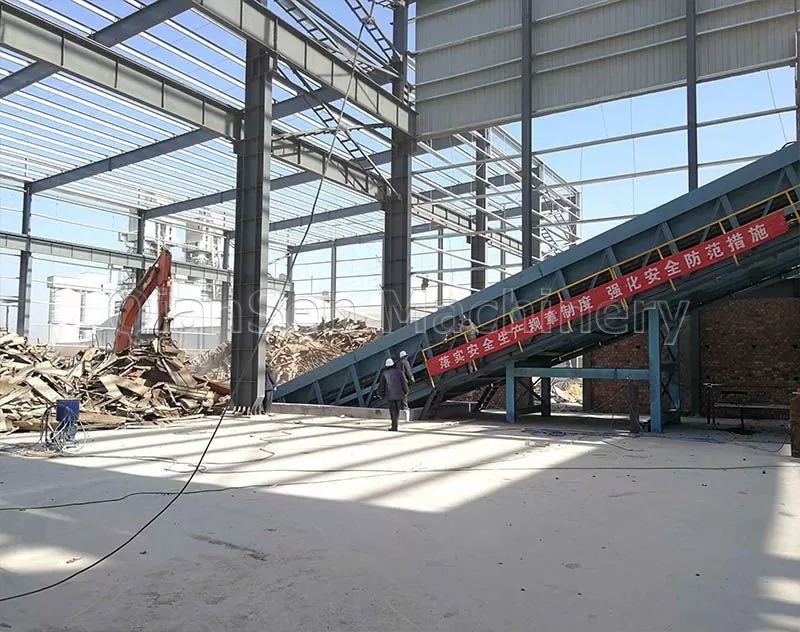
An industrial shredder rarely functions as an isolated unit. High-throughput processing facilities integrate the shredding mechanism within an automated system to extract maximum secondary material value.
Inbound bales or loose hoppers feed the primary intake via heavy-duty steel apron conveyors or vibratory feeders. The steady introduction of material prevents drive overloading and rotor stall conditions. The integration steps follow a strict mechanical progression:
Primary Volumetric Reduction: The primary shredder for aluminum cans breaks bales and produces uniformly dimensioned shreds.
Magnetic Separation: Overband cross-belt magnets or high-intensity magnetic head pulleys extract ferrous contaminants, such as steel cans, strapping wire, and tramp hardware, protecting downstream screens.
Fines and Dust Screening: Rotary trommel screens or vibrating deck screens remove under-sized glass shards, sand, and aluminum micro-fines before thermal processing.
Thermal De-Coating (De-lacquering): Shredded, clean fragments travel through a rotary drum kiln operating between 500°C and 550°C to pyrolyze paint and ink without melting the underlying aluminum.
Non-Ferrous Separation: Eddy Current Separators (ECS) isolate any residual plastic labels or non-metallic waste, ensuring the resulting stream reaches purity levels exceeding 99% pure UBC scrap.
Engineering Parameters: Capacity, Power, and Drive Selection
Sizing a shredder for aluminum cans requires calculating volumetric displacement and bulk density conversions rather than measuring weight alone. Loose cans occupy substantial chamber volume, demanding large cutting chambers, whereas dense bales require substantial torque to overcome compaction resistance.
| System Scale | Processing Throughput | Recommended Drive Power | Preferred Machine Configuration |
|---|---|---|---|
| Standard Yard | 500 – 1,500 kg/hr | 37 kW – 75 kW (Electric) | Dual-Shaft Shear (VFD Driven) |
| Regional Recycling Depot | 2,000 – 5,000 kg/hr | 90 kW – 160 kW (Electric/Hydraulic) | Dual-Shaft Primary + Magnetic Line |
| Industrial Casthouse Supply | 5,000 – 15,000 kg/hr | 200 kW – 400+ kW (Hydraulic System) | Heavy Dual-Shaft Shear + Hammer Mill |
Machinery manufactured by QianSen incorporates programmable logic controllers (PLC) that monitor real-time motor amp draw, shaft torque, and bearing temperatures. When processing dense bale cores, hydraulic or variable electric drives execute an automatic reverse sequence to clear the cutting zone before resuming forward shredding, preventing drive-train failure.
Operational Maintenance and Knife Gap Management
Maintaining clean shear cuts on thin aluminum sheets requires precise knife gap clearances. Thin aluminum sheets (averaging 0.25 mm to 0.30 mm) tend to fold, pinch, and wrap around shafts if cutter-to-cutter clearances widen beyond permissible tolerances.
When blade faces wear down, mechanical friction increases dramatically. Instead of clean shearing, the machine tears and smears the metal, increasing motor power draw and raising chamber operating temperatures. Maintenance schedules require periodic torque checks on shaft tensioning collars, knife edge redressing, and shimming of fixed counter-knives. Implementing systematic maintenance schedules guarantees continuous operation, extended blade life, and consistent output grain size.
Equipment Procurement Checklist for UBC Processing Lines
Procurement teams and facility engineers evaluating heavy machinery must assess key mechanical and operational attributes before placement of orders:
Drive Redundancy and Overload Protection: Verify planetary drive load ratings, fluid couplings, or integrated pressure transducers that respond rapidly to uncrushable obstructions.
Shaft Construction: High-tensile forged 42CrMo or 4340 alloy steel hex shafts resist deflection and torsional fatigue under continuous, asymmetric impact loads.
Modular Knife Replacement: Individual blade access designs minimize maintenance downtime during re-tooling compared to monolithic rotor designs.
Bearing Chamber Isolation: Outboard-mounted spherical roller bearings prevent the ingress of aluminum dust, water, and acidic residue from remaining canned beverages.
Investing in equipment engineered by QianSen ensures processing lines run at peak output with minimal lifecycle maintenance costs.
Frequently Asked Questions (FAQ)
What is the ideal output size for UBC scrap before furnace charging?
The standard target size for shredded UBC scrap ranges from 25 mm to 75 mm. This size provides rapid submergence in secondary melting furnaces while allowing sufficient airflow during thermal de-coating to strip paints and inks without causing excess oxidation.
How does a dual-shaft shear handle contamination like tramp steel?
Modern dual-shaft shredders utilize PLC-driven load monitoring. When the cutters encounter uncrushable tramp steel, current spikes trigger an immediate reverse rotation to dislodge the object, followed by an automated alert for operator clearance, preventing catastrophic shaft or tooth breakage.
Why is bearing isolation necessary in a shredder for aluminum cans?
Used beverage cans contain residual liquids, including sugars, carbonated acids, and wash water, mixed with fine aluminum dust. Outboard-mounted bearing housings with multi-barrier labyrinth seals isolate bearing lubricants from these corrosive liquids and abrasive particulates, preventing premature bearing failure.
What drive type is better for processing high-density bales: Hydraulic or Electric?
Hydraulic drives provide high starting torque at low speeds and feature smooth, shock-free directional reversals, making them suitable for dense, unpredictable bale feeds. Modern electric drives paired with heavy planetary gearboxes and VFDs offer high energy efficiency and straightforward maintenance for continuous medium-to-heavy loads.
How does blade geometry affect the production of aluminum fines?
Sharp, precision-spaced rotary shear blades produce clean cuts with minimal fines. High-speed impact units generate more fines due to fragmentation, requiring downstream air classifiers or screens to capture valuable small particles and prevent excessive dross formation during melting.
Direct Engineering Consultation and Equipment Sizing
Establishing an efficient aluminum recycling operation begins with selecting the correct machinery built for your specific feed conditions and target production capacity. Engineering teams review scrap characteristics, hourly throughput targets, and downstream sorting requirements to deliver fully integrated shredding systems.
Submit your material specifications, target throughput (tons per hour), and facility layout requirements to our application engineers. Contact our sales department to receive technical layout drawings, motor power recommendations, and a detailed commercial proposal for your processing facility.