





How Top-Tier Car Shredder Manufacturers Design Systems for Maximum Scrap Recovery
Released on Jul. 29, 2026
End-of-life vehicle (ELV) processing demands heavy-duty industrial machinery built to endure continuous high-impact torque and abrasive metal wear. Transforming whole car bodies, structural automotive parts, and light iron scrap into dense, furnace-ready material requires specialized machinery engineered for longevity. Global recycling facilities face constant pressure to process higher volumes per hour while controlling operational expenses and maintaining clean material separation. Selecting established car shredder manufacturers forms the foundation of an efficient, profitable scrap metal yard.
Equipment design directly dictates plant uptime, electrical consumption, wear-part replacement cycles, and downstream sorting efficacy. The mechanical stress placed on a primary hammermill or shear shredder during operation is immense. Structural steel frames, engine blocks, driveshafts, and internal automotive assemblies must be fragmented reliably without causing premature structural fatigue. Manufacturers such as QianSen build industrial metal recycling equipment designed to balance rotor inertia, motor output, and heavy-plate structural reinforcement to handle continuous processing duty cycles.
Mechanical Architectures in Heavy Scrap Processing
Primary car shredding systems rely heavily on high-speed hammermill configurations or low-speed, high-torque twin-shaft shear mechanisms. The choice between these configurations depends on the target output density, hourly volume requirements, and downstream separation infrastructure.
Hammermill Shredders
Hammermill auto shredders are the industry standard for high-capacity ELV processing. These machines utilize a heavy central rotor equipped with free-swinging or fixed alloy hammers. Spinning at high revolutions per minute inside a reinforced shredding chamber, the hammers impact incoming scrap vehicles against anvil plates and breaker bars. Material is repeatedly struck until it is small enough to pass through discharge grates located beneath or behind the rotor assembly.
Rotor Inertia: High-mass rotors store kinetic energy, allowing the system to crush dense structural frame posts and suspension components without stalling the main motor.
Internal Liners: Replaceable liner plates made from abrasion-resistant manganese steel protect the main housing from continuous wear.
Anvils and Grates: Heavy cast steel grates control the output sizing, directly influencing the density of the final shredded scrap.
Twin-Shaft Shears and Pre-Shredders
Low-speed twin-shaft systems utilize counter-rotating hex shafts fitted with hardened steel cutter blades. These machines operate at high hydraulic or mechanical torque to shear vehicle chassis into smaller, manageable pieces. Pre-shredders are often positioned upstream of primary hammermills to open up car bodies, reduce volume spikes, and extract trapped fluids or un-shreddable items before high-speed processing begins.
By pre-conditioning the feed material, recycling plants lower peak energy loads on the primary shredder, lower hammer wear rates, and significantly reduce operational safety hazards associated with sealed tanks or heavy solid scrap items.
Key Engineering Variables When Evaluating Car Shredder Manufacturers
Selecting machinery requires evaluating structural design details, metallurgy, and drive system mechanics. Top car shredder manufacturers prioritize heavy frame construction, high-efficiency power transmission, and simple access for maintenance routines.
A primary factor in machinery evaluation is housing thickness and stress distribution. Machine frames must withstand continuous impact loads without developing fatigue cracks over years of operation. Heavy welded steel plate construction, reinforced with external ribbing and stress-relieved weld seams, is required for long-term structural integrity.
Another major consideration is the drive configuration. Industrial processing lines typically utilize one of two main power delivery methods:
Direct-Drive High-Power Electric Motors: Coupled through fluid couplings or gearbox reducers, these motors deliver consistent energy efficiency for large-scale fixed installations running continuous daily shifts.
Hydraulic Drive Systems: Offering variable shaft speeds and automatic fast-reversing features, hydraulic drives protect cutter shafts from non-shreddable metal jams, making them ideal for heavy shearing applications.
The manufacturing capabilities of QianSen reflect these industry demands, focusing on heavy-duty frame fabrications, precise dynamic balancing of rotors, and integrated hydraulic service access doors that simplify hammer and grate changes.
Downstream Material Separation Systems
A primary shredder is only as effective as the material recovery system attached to it. Converting shredded vehicle bodies into revenue requires clean separation of ferrous scrap, non-ferrous metals, and auto shredder residue (ASR), which includes plastics, foam, glass, and textiles.
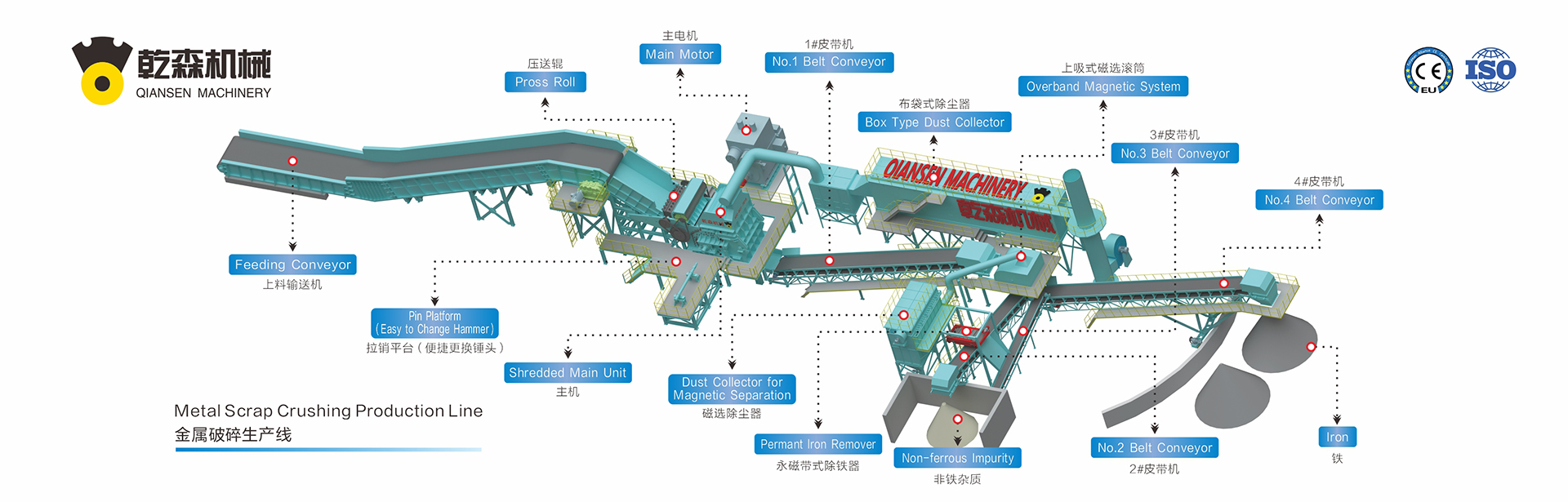
Once the material exits the shredder discharge grate, it moves across a series of automated separation stages designed to refine output quality:
Air Classification and Dust Extraction
High-velocity air currents pass through the falling material stream to pull light organics, foam, and fine debris into cyclone collectors. Removing light fluff early prevents downstream equipment blockage and improves the purity of metal fractions.
Magnetic Separation Systems
Heavy-duty magnetic drums or over-belt cross-belt magnets pull clean ferrous scrap out of the main shredded stream. Dual-stage magnetic systems help separate high-grade iron and steel from composite scrap, delivering high-density, low-copper ferrous fractions preferred by steel mills.
Eddy Current and Sensor Sorting
Non-ferrous materials passing the magnetic separators travel over high-speed eddy current separators (ECS). Fast-rotating magnetic rotors inside non-conductive drums induce eddy currents in aluminum, copper, and brass pieces, physically repelling them away from inert waste materials. Sensor-based sorting systems, including induction and X-ray transmission, further refine these non-ferrous mixes into pure copper wire and aluminum fractions.
Wear Material Metallurgy and Maintenance Protocols
Operating costs in scrap shredding facilities are dominated by power consumption and wear-part replacement. The abrasive nature of metal-on-metal impact consumes tons of manganese steel hammers, anvils, and liner plates annually. Leading car shredder manufacturers dedicate substantial research into specialized metallurgy to extend component life.
Manganese steel alloys are widely chosen for shredder hammers because of their work-hardening characteristics. Under repeated high-impact force during operation, the surface structure of manganese steel hardens automatically, creating a tough wear surface while maintaining a ductile core that resists fracturing. For lower-impact, high-abrasion zones, high-chromium cast iron alloys or custom heat-treated alloy steels are employed.
Routine maintenance schedules must be maintained to sustain target output rates and avoid unexpected breakdowns. Essential maintenance procedures include:
Daily Rotor Inspection: Checking hammer pin wear, inspecting hammer faces for uneven wear patterns, and monitoring rotor balance to prevent severe bearing vibration.
Hydraulic System Monitoring: Testing oil cleanliness, tracking operating temperatures, and checking fluid pressure levels across high-torque drive motors.
Anvil and Grate Clearance Adjustments: Maintaining correct gaps between hammer tips and internal anvils ensures optimal shred size and prevents material recirculation, which wastes power.
Hard-Facing Weld Maintenance: Applying protective hard-facing weld layers onto high-wear surfaces during scheduled downtime to prolong component lifespans.
Engineering teams from QianSen design shredding chambers with hydraulic pin-pullers and clamshell opening housings, enabling service crews to swap heavy hammers and grate bars safely and quickly, reducing machine downtime.
Commercial Impact of Shredded Scrap Quality Standards
Scrap yards sell output based on standardized international trade specifications, such as those set by the Institute of Scrap Recycling Industries (ISRI). High-capacity car shredder manufacturers engineer their machines to deliver scrap that consistently meets these exact trade definitions.
Properly shredded and sorted ELV scrap yields clean, high-density material classified under standard categories:
Shredded Auto Scrap (ISRI 210/211): Homogeneous iron and steel scrap derived from automobiles, trucks, and light iron. Must be free of excessive fluff, non-ferrous metals, and excessive rust.
Zorba: Consists of a mixture of non-ferrous metals, predominantly aluminum, generated by shredding scrap vehicles. Higher purity rates command premium market prices from smelters.
Zurik: Heavy non-ferrous fractions containing stainless steel, copper wire, brass, and nickel alloys isolated by downstream sensor equipment.
Achieving dense output lowers shipping freight costs, as high-density shredded metal fills sea containers or rail cars to weight limits before volumetric limits are reached. Additionally, electric arc furnace (EAF) steelmakers pay higher prices for uniform, dense scrap that melts faster and consumes less energy per melt cycle.
Operational Considerations for Scrap Yard Integration
Integrating a complete vehicle shredding system requires careful civil engineering, electrical supply design, and environmental control planning. A full-scale plant operates as a continuous production line, requiring balanced material feed rates to maintain efficiency.
Power infrastructure is a primary planning element. High-capacity hammermills often require high-voltage electrical transformers capable of handling sudden load surges when processing thick structural steel items. Soft-start systems or variable frequency drives help control electrical grid draw during initial machine start-up.
Environmental management controls are mandatory for modern processing operations. Complete installation designs incorporate:
Dust Suppression Systems: High-pressure water misting nozzles installed at loading hoppers, shredder discharge points, and conveyor transfer zones to settle airborne particulate matter.
Acoustic Enclosures: Sound-insulating perimeter walls and heavy enclosure housings surrounding primary impact zones to meet municipal industrial noise regulations.
Enclosed Runoff Containment: Concrete pad paving fitted with fluid collection channels and oil-water separators to prevent residual vehicle fluids from contaminating groundwater.
Experienced car shredder manufacturers supply complete plant engineering layouts that integrate these environmental controls seamlessly alongside heavy material handling equipment, ensuring full regulatory compliance.
Frequently Asked Questions
Q1: What power ratings are required for industrial car shredder
installations?
A1: Industrial car shredders generally utilize motor
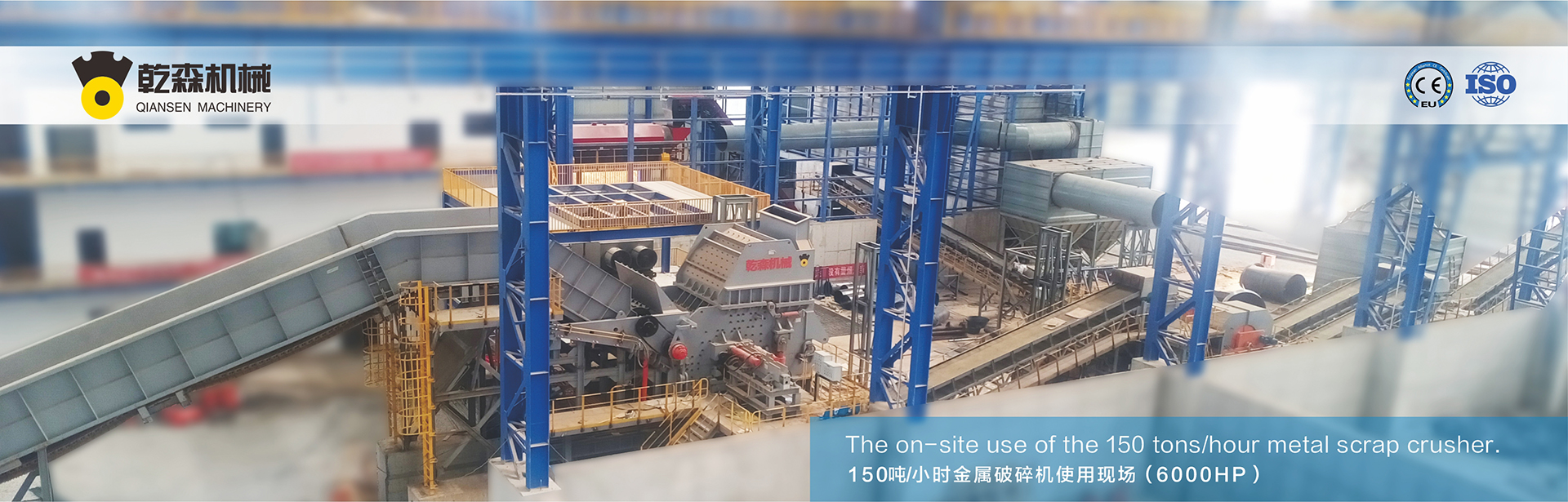
setups ranging from 1,000 horsepower up to 6,000 horsepower for heavy-duty,
high-capacity systems. The required power rating depends directly on the desired
tons-per-hour output, the mix of feed materials, and whether a pre-shredder is
integrated upstream.
Q2: What is the typical service life of manganese steel shredder
hammers?
A2: Hammer wear life depends heavily on feed material type,
contamination levels, and daily output volume. On average, high-manganese steel
hammers process between 2,000 to 5,000 tons of scrap metal before requiring
hard-facing weld buildup, rotation, or complete replacement.
Q3: How do modern shredders handle un-shreddable materials like heavy
solid shafts or engine blocks?
A3: Modern hammermills incorporate
tramp metal ejector doors. When a heavy, non-shreddable object enters the
chamber, the rotor force throws the object against a spring-loaded or hydraulic
safety door, releasing it from the machine before internal component damage
occurs.
Q4: Why is pre-shredding beneficial in ELV recycling
operations?
A4: Pre-shredders cut intact car bodies into uniform,
open pieces at low speeds. This process flattens power spikes on the main
shredder, reduces wear on hammers and grates, lowers explosion risks from sealed
gas tanks, and yields a consistent feed rate that improves downstream material
separation efficiency.
Q5: How do car shredder manufacturers address dust and environmental
emissions?
A5: Processing lines incorporate integrated dust
collection systems, including high-capacity cyclone extractors, baghouses, and
high-pressure water fogging rings at material transfer points to control
particulate emissions and ensure compliance with local environmental
standards.
Request a Customized Equipment Specification
Selecting reliable processing machinery requires custom mechanical configurations tailored to your site throughput goals, electrical supply capacity, and local scrap composition. The technical team at QianSen offers custom project layout designs, engineering consultations, and complete equipment quotes tailored to your industrial metal recycling requirements.
Contact our engineering sales department today to submit your operational specifications and request a detailed machinery proposal for your scrap yard installation.