




How Does a Heavy-Duty Paper Core Shredder Reduce Logistics and Processing Costs?
Released on Jul. 02, 2026
Industrial manufacturing, paper milling, and converting facilities generate substantial amounts of waste in the form of heavy-duty cardboard tubes, spiral-wound cores, and shipping rolls. These structures are engineered to withstand extreme radial forces during winding operations, making them incredibly resilient. Consequently, when they become obsolete, damaged, or reach the end of their lifecycle, disposal becomes a significant operational challenge. Standard reduction machinery often fails to process these dense materials, leading to high maintenance costs and frequent equipment downtime.
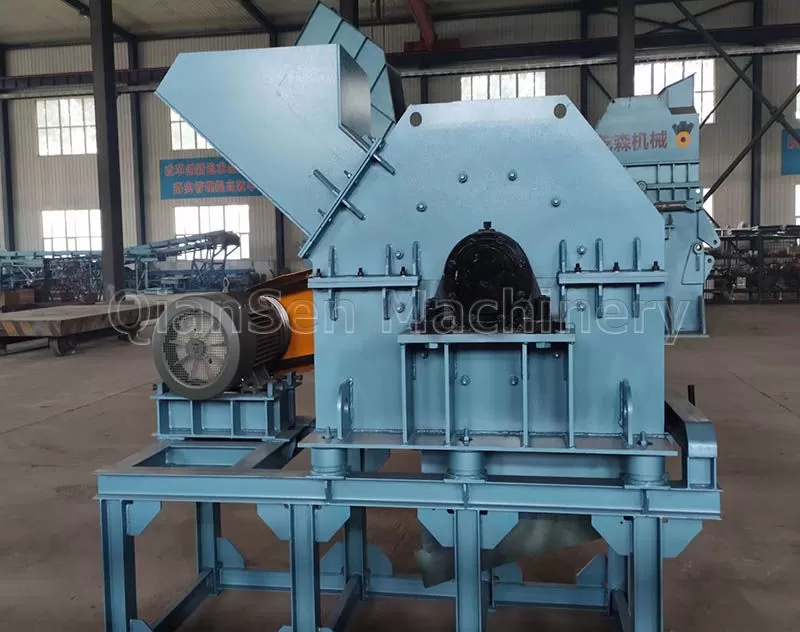
To address this issue, integrating a specialized paper core shredder into the waste processing line is a practical step for modern recycling facilities. These machines are engineered specifically to overcome the structural integrity of high-density cardboard, converting bulky, hollow cylinders into manageable, high-density chips. QianSen designs industrial shredding solutions that address the mechanical demands of processing tough paper composites, helping facilities reclaim floor space and lower material handling expenses.
The Physics of Spiral-Wound Cardboard Core Destruction
Understanding why standard shredders struggle with paper cores requires an examination of how these tubes are manufactured. Spiral-wound cores are constructed by wrapping multiple layers of kraft paper around a mandrel, with heavy industrial adhesives—such as sodium silicate or polyurethane-based glues—applied between each layer. This creates a composite material with immense hoop strength, designed to resist crushing under the weight of tons of wound paper, plastic film, or metal sheeting.
When a conventional granulator attempts to process these tubes, the circular profile of the core deflects the cutting blades. This leads to friction, heat build-up, and rapid blade wear. The adhesive layers are highly abrasive, acting like fine sandpaper on cutting surfaces. A dedicated paper core shredder avoids these issues by utilizing high-torque, low-speed shearing mechanisms rather than high-speed impact cutting.
The primary mechanical action relies on pulling the core into the space between two counter-rotating shafts. As the hooks on the cutter discs grab the cardboard surface, they apply point-specific radial shear. Because the force is concentrated on a small surface area, the structural integrity of the tube is breached immediately. Once the outer wall is punctured, the machine tears the spiraled layers apart along their glue lines, requiring significantly less energy than trying to pulverize the material through sheer impact.
Indusrial Application Scenarios and Operational Pain Points
Different sectors experience unique challenges when managing paper core waste, demanding tailored approach configurations.
Paper and Board Manufacturing Mills
In large-scale paper mills, cores that fail quality checks or are damaged during transport cannot be easily re-introduced into the pulping process due to their bulk. Throwing whole cores into a hydrapulper is inefficient; the dense adhesive barriers prevent water penetration, resulting in long cycle times and potential damage to downstream screening equipment. By installing a paper core shredder, mills can reduce these tubes into small, flat fragments. These pieces hydrate rapidly in the pulping system, accelerating fiber recovery and keeping production lines moving.
Plastic Film and Foil Converting Plants
Converting facilities slit wide master rolls of film, foil, or paper into smaller retail or industrial widths. This process generates massive quantities of short core offcuts. These scraps accumulate rapidly around slitting stations, presenting safety hazards and occupying premium floor space. A compact, quiet shredding unit positioned adjacent to the slitter allows operators to dispose of offcuts immediately, maintaining a clean workspace and preparing the scrap cardboard for bulk compacting.
Logistics and Warehousing Hubs
Logistics facilities often receive materials wrapped on heavy-duty cardboard tubes that must be disposed of after unwinding. Because these tubes are hollow, they possess an extremely low bulk density. Transporting them to a recycling facility in their original form means paying to transport air, which inflates freight costs and increases carbon footprints. Shredding these tubes onsite increases the bulk density of the waste by up to 800%, allowing for dense baling and lower transport costs.
Key Mechanical Configurations of QianSen Shredders
Industrial durability depends on the alignment of several key components designed to handle the abrasive nature of paper and adhesive composites.
Shaft Configuration and Torque Delivery
Dual-shaft configurations are generally preferred for large-scale operations. These systems feature two parallel shafts fitted with interlocking cutting discs. The shafts rotate at different speeds, creating a continuous tearing action that prevents the material from wrapping around the rotor. For operations handling exceptionally long or large-diameter cores, single-shaft units equipped with a hydraulic ram pusher can be utilized. The ram pushes the core against a high-speed rotor, ensuring continuous contact and controlled material feed rates.
Blade Metallurgy and Profile Design
Due to the abrasive adhesives used in core manufacturing, blade selection is key to maintaining operational uptime. QianSen utilizes high-alloy tool steels, such as D2 or Cr12MoV, which undergo specialized heat treatment processes to achieve a hardness of 58-60 HRC. The profile of the cutter teeth is designed with specific hook geometries that grasp the curved surface of the cores without slipping. Blade thickness and hook count are customized based on the desired output particle size and the wall thickness of the target waste material.
Drive Systems and Smart Control Logic
High-torque gearboxes are matched with heavy-duty electric motors to ensure the machine can handle sudden load spikes. Modern units integrate Programmable Logic Controllers (PLCs) with smart monitoring capabilities. If a core with an unusually thick wall or metal end-caps causes a torque overload, the PLC automatically stops the rotor and reverses its direction for a brief cycle. This action repositions the material before attempting to shear it again, protecting the mechanical drive train from damage and eliminating the need for manual intervention by operators.
Integration into Modern Recycling and Processing Lines
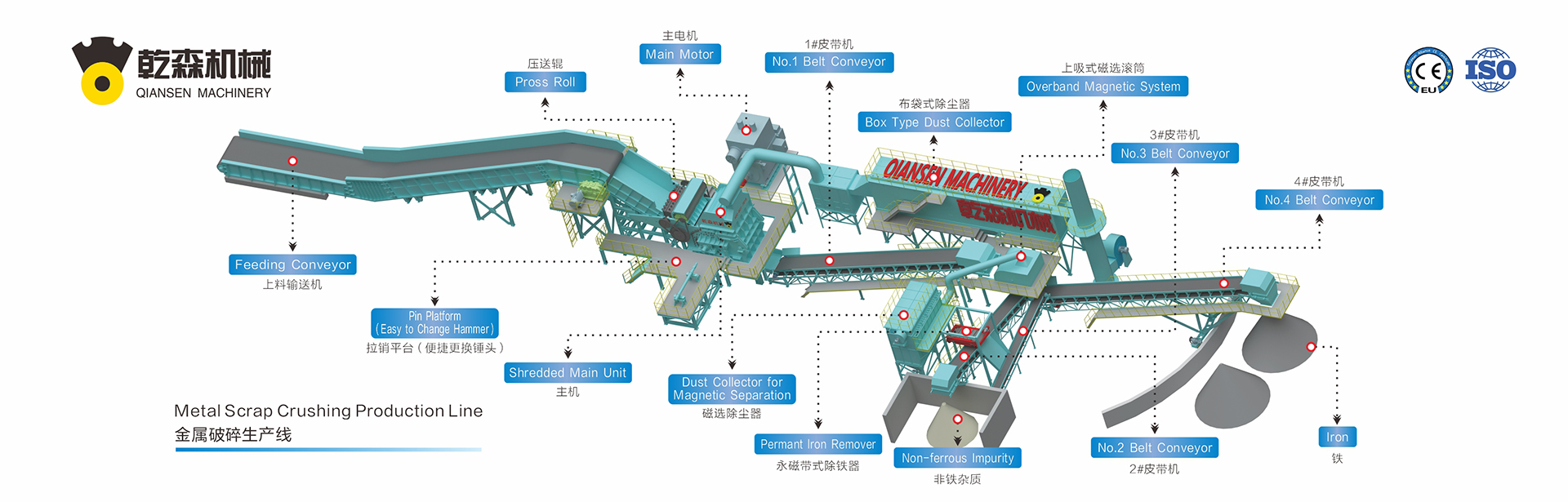
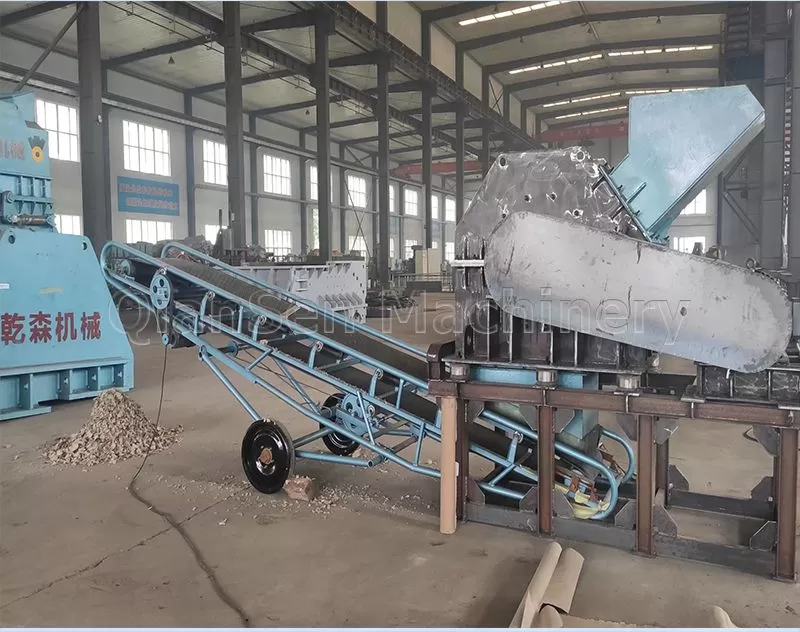
A paper core shredder rarely operates as a standalone unit; its utility is maximized when integrated into a broader material handling system. The input side often features customized hopper designs. For manual feeding, long, inclined hoppers prevent operators from reaching near the cutting chamber. For automated lines, heavy-duty chain conveyors or vibrating feeders deliver cores directly from the production floor to the shredder inlet.
On the discharge side, the shredded material can be handled in several ways:
Pneumatic Extraction: For thin-walled cores or light cardboard chips, high-velocity air systems can transport the shredded material directly to cyclone separators or storage silos.
Belt Conveyors: Heavy-duty rubber belt conveyors can transfer the shredded chips to a horizontal baler for high-density compaction.
Magnetic Separation: Many industrial cores feature steel or aluminum endcaps for structural support during winding. Installing a cross-belt magnetic separator over the discharge conveyor isolates these metal fragments, protecting downstream processing equipment and creating a secondary, clean metal scrap stream.
Operational Safety and Maintenance Protocols
Maintaining high throughput and extending the service life of shredding machinery requires adhering to structured maintenance schedules and safety procedures.
First, daily inspections of the cutting chamber are helpful to identify any binding materials or non-shreddable foreign objects that may have entered the hopper. Although PLC protection systems mitigate major damage, small metal wires or stones can cause micro-chipping on the blade edges, leading to premature wear. Operators must verify that the cutting gaps between the interlocking blades remain within specified tolerances; wider gaps lead to tearing rather than clean shearing, which increases power consumption.
Second, lubrication protocols for the main bearings and the planetary gearbox must be followed strictly. Given the dusty environments typical of paper processing plants, dust-sealed bearings are a standard specification. Utilizing automated lubrication systems ensures that grease is delivered to the vital moving parts at regular intervals, purging fine paper dust and preventing abrasive wear inside the bearing housings.
Finally, dust management within the facility must be addressed. Shredding dry cardboard produces fine paper fibers that can pose respiratory and explosion hazards if left unmanaged. QianSen systems can be outfitted with localized dust extraction hoods and misting nozzles that suppress airborne particulates right at the point of shear, ensuring a safe working environment that complies with local air quality and occupational health regulations.
Frequently Asked Questions
Q1: Can a paper core shredder handle tubes with plastic coatings or aluminum foil linings?
A1: Yes. The high-torque cutting systems used in these shredders can shear through composite tubes containing plastic barriers or aluminum foils. However, if the output material is destined for paper recycling pulpers, these non-paper elements must be separated downstream using density tables or specialized screening equipment to avoid contaminating the recovered fiber pulp.
Q2: How often do the blades on a paper core shredder need to be sharpened?
A2: Blade longevity depends heavily on the adhesive content of the processed cores and the presence of metallic contaminants. Under normal operating conditions with high-grade D2 tool steel blades, sharpening intervals typically range from 1,000 to 2,000 operating hours. Many modern cutter designs allow for individual blade segments to be removed, sharpened, or replaced without dismantling the entire shaft assembly, reducing maintenance downtime.
Q3: What is the maximum wall thickness that these machines can process?
A3: Standard industrial configurations can process wall thicknesses up to 25mm (approx. 1 inch) without difficulty. For ultra-dense cores used in heavy metal winding applications, which can feature wall thicknesses exceeding 40mm, heavy-duty dual-shaft shredders with reinforced drive shafts and specialized planetary gearboxes are recommended to handle the extreme radial shearing forces required.
Q4: How does the machine handle metal end caps often found on heavy shipping cores?
A4: Light metal end caps made of aluminum or thin-gauge steel are sheared by the high-torque blades. However, to prevent premature blade wear, it is recommended to remove heavy cast-iron or thick steel inserts before shredding. To protect the machine, the integrated PLC system will trigger an auto-reverse cycle if an un-shreddable metal object enters the chamber, allowing the operator to safely retrieve the piece.
Q5: Is a single-shaft or dual-shaft configuration better for paper core processing?
A5: The choice depends on your space constraints and throughput requirements. A dual-shaft shredder is highly effective for high-volume, continuous processing where cores can be fed in batches. A single-shaft shredder equipped with a hydraulic pusher is better suited for long, large-diameter cores, as the pusher feeds the material against the rotor in a controlled manner, preventing the core from bouncing inside the hopper.
Industrial Inquiries and Engineering Consultation
Selecting the correct machinery configuration requires analyzing your specific waste stream, including average core diameters, wall thicknesses, throughput requirements, and downstream processing goals. QianSen engineers custom shredding systems designed to match the specific demands of your facility, ensuring reliable operation, low power consumption, and minimal maintenance costs.
To receive detailed technical specifications, customized layout drawings, or a formal quotation for your project, please submit your inquiry to our technical sales team. Provide details regarding your daily waste volume and core dimensions so our engineers can assist you with an appropriate machinery recommendation.