




Scrap Metal Shredder Price: 2026 Industrial Cost & Sizing Guide
Released on Sep. 14, 2026
Metal processing yards, recycling operations, and manufacturing plants face substantial technical and logistical demands when commissioning comminution systems. Selecting high-tonnage size-reduction machinery requires a systematic evaluation of engineering features against initial capitalization demands. Navigating the scrap metal shredder price requires looking beyond the base quotation to consider drivetrain design, metallurgy, electrical integration, and post-installation throughput metrics.
Core Mechanical Variables Governing Scrap Metal Shredder Price
The structural framework of an industrial shredder forms the largest portion of its manufacturing cost. A machine intended to shear municipal aluminum siding carries drastically different manufacturing tolerances and stress thresholds than a fragmentizer built to rip mixed heavy scrap (HMS 1 & 2) or whole car bodies. The resulting variance in structural steel grading, frame reinforcement, and CNC machining hours directly determines the initial scrap metal shredder price established by heavy equipment manufacturers.
Rotary Mechanics and Cutting Chamber Geometry
The cutting chamber represents the zone of maximum mechanical stress. Twin-shaft shredders rely on high-torque, low-speed shearing action to tear high-tensile metals. Shafts machined from single-piece forged alloy steel, such as 42CrMo or equivalent high-nickel-chromium alloys, drive up baseline capital requirements due to prolonged multi-axis machining and specialized heat treatments. Hexagonal or splined shaft designs ensure uniform torque transfer across every blade under fluctuating loads, avoiding localized stress risers that fracture lower-grade welded shafts.
Blade composition introduces another price differential. Shredder blades cast or machined from specialized tool steels like H13, D2, or proprietary modified alloys undergo vacuum quenching and cryogenics to achieve balanced hardness (typically 56–60 HRC) without becoming brittle. Shredder chambers equipped with surface cladding, welded hardfacing, and replaceable internal wear liners made from Hardox 450 or NM500 steel require higher initial manufacturing budgets. These additions prevent unrecoverable frame distortion during multi-shift operations.
Electric Drives versus Hydrostatic Transmission Systems
Torque generation defines processing efficacy and impacts machine acquisition cost.
Direct Electric Drive: Utilizes heavy-duty slip-ring or high-torque squirrel-cage induction motors paired with planetary gearboxes. This configuration yields exceptional electrical efficiency (up to 92-95%) and reduces operational maintenance to periodic lubrication and seal checks. However, electric drives require sophisticated variable frequency drives (VFDs) and heavy-duty planetary gearboxes capable of absorbing momentary rotor stalls when uncrushable materials enter the cutting chamber.
Hydrostatic Drive Systems: Employs variable-displacement hydraulic axial piston pumps running dedicated high-displacement radial piston hydraulic motors directly mounted to the drive shafts. This system provides infinitely variable speed control, immediate auto-reverse within milliseconds upon pressure spike detection, and superior power density. The integration of high-pressure hydraulic manifolds, proportional valving, multi-stage filtration loops, and massive oil-cooling heat exchangers increases the baseline machinery investment relative to simpler standard drive units.
Chamber Sizing and Daily Throughput Capacity
Throughput capacity scales dynamically with rotor diameter and cutting zone length. A 1000mm chamber length configured for electronic scrap (WEEE) processing utilizes an entirely different chassis structure than a 2500mm chamber rated for white goods and structural steel profiles. Doubling rotor length requires more than double the structural mass: bedplates require heavier wide-flange beams, bearing blocks must incorporate spherical roller bearings with high dynamic load ratings, and the hydraulic power unit must supply substantially higher flow rates to maintain cutting speed.
Industrial Investment Tiers: Scrap Metal Shredder Price by Application
Equipment buyers must categorize target feedstocks to determine the appropriate machinery class. Processing expectations determine the scale of structural engineering, drivetrain capacity, and the resulting market valuation.
Class I: Light Industrial and Electronic Waste Systems ($35,000 – $95,000)
These units target municipal solid waste, electronic waste scrap (e-scrap), aluminum turnings, copper radiators, and thin-gauge stamped sheet metals (thickness below 2mm). Power configurations range between 30 kW and 75 kW. They feature compact twin-shaft or four-shaft designs, fabricated frames, and standard alloy blades. They are suited for batch operations or small-scale recycling operations processing up to two metric tons per hour.
Class II: Medium-Duty Industrial and Automotive Profile Fragmentizers ($100,000 – $320,000)
Designed for higher yield processing facilities, these shredders handle white goods (refrigerators, washing machines), bundled light metals, automotive engine blocks, aluminum extrusions, and mixed non-ferrous fractions. Drivetrains span 90 kW to 250 kW, incorporating reinforced drive couplings, planetary transmission stages, and heavy-duty automatic reversing systems. Engineering firms like QianSen focus on this tier to deliver balanced cost-to-performance machines, applying reinforced blade geometry and modular wear assemblies to maintain structural durability without unnecessary operational overhead.
Class III: Heavy Fragmentizers and High-Tonnage Car Body Shredders ($350,000 – $1,200,000+)
This class includes mega-shredders, continuous-feed hammer mills, and high-horsepower vertical fragmentizers. Operating from 300 kW to over 1500 kW, these systems process complete end-of-life vehicles (ELVs), structural steel frames, heavy baled HMS scrap, and high-volume industrial stampings. These capital equipment systems integrate massive vibrating feed tables, hydraulic hold-down arms, explosion-relief chambers, advanced non-ferrous eddy current sorting lines, and centralized cyclone dust collectors.
Hidden Total Cost of Ownership (TCO) Factors
The upfront purchase figure represents only one component of capital planning. Plant managers and financial controllers must balance machine capitalization against ongoing operating expenditures (OPEX) to establish true lifecycle value.
Tooling Life and Blade Maintenance Intervals
Cutting tools are sacrificial components subject to severe abrasive and impact wear. Calculating operational cost requires assessing blade reconfiguration procedures: do the blades allow for continuous in-situ hardfacing, or must the entire rotor be extracted for bench disassembly? Segmented blade designs lower long-term maintenance costs because operators can swap worn cutting hooks individually rather than replacing full single-piece rotor discs. Unplanned downshifts caused by complex blade maintenance degrade site profit margins quickly.
Energy Consumption Efficiency
Kilowatt-hour usage per ton of processed scrap dictates site profitability. An underpowered shredder operating near maximum motor thermal ratings experiences frequent stalling, high inrush currents, and elevated power costs. A correctly sized shredder with intelligent logic controls cuts cleanly through the shear plane with minimal stalling, yielding lower kilowatt-hour metrics per metric ton. Power management modules, regenerative braking designs, and soft-start systems lower electrical infrastructure costs and stabilize plant energy expenses.
Downstream Material Separation Integration
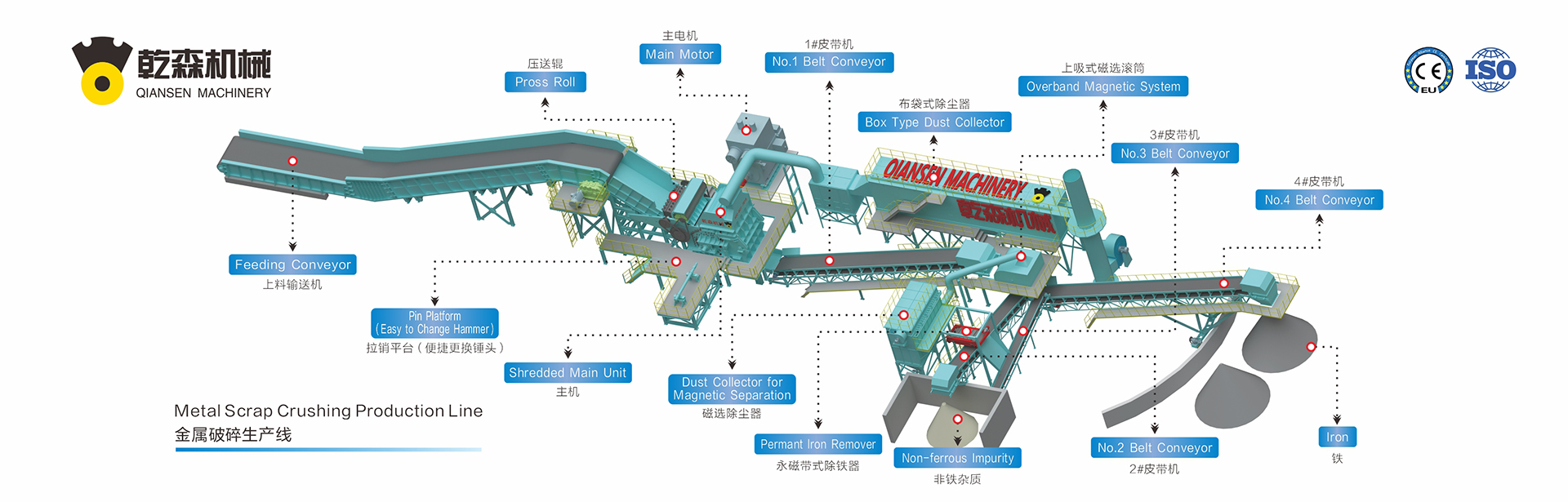
A primary shredder rarely operates in isolation. Complete plant layouts require complementary handling stages that influence total procurement spending:
Vibratory discharge feeders to evenly disperse shredded materials.
Overband cross-belt magnetic separators for ferrous scrap extraction.
Eddy current separators for valuable non-ferrous (aluminum, copper) sorting.
Air classification systems to separate auto shredder residue (ASR) and light plastics from high-density metals.
High-efficiency dust collection and spark-suppression dampening systems to adhere to industrial safety and environmental emissions standards.
Metallurgical Considerations and Build Integrity
Differences in structural integrity explain the wide pricing spectrum found across international equipment suppliers. Heavy comminution machinery requires tight engineering standards to survive the internal shocks generated by processing non-crushable tramp metals.
Precision CNC line-boring of the primary bearing housings ensures concentricity across the entire length of the cutting chamber. Misaligned bearing housings cause premature failure of high-capacity spherical roller bearings, shaft binding, and uneven tooth engagement. High-tier industrial equipment manufacturers, including QianSen, run finite element analysis (FEA) on the fabricated chassis to identify stress concentrations, adding interior gussets and heavy bracing to neutralize the continuous dynamic shock loads delivered by heavy scrap processing.
Automated lubrication delivery systems provide continuous grease delivery to labyrinth-sealed bearing assemblies, isolating sensitive rotating internals from abrasive metal dust, scale, and particulate contamination. Choosing dry-sump planetary gearboxes with independent fluid filtration and active oil-cooling circuits further safeguards high-value gearing assemblies against thermal breakdown during sustained high-load shifts.
Optimizing the Scrap Metal Shredder Price to Match Operational Strategy
Procuring a shredder requires matching machine throughput directly to inbound material streams. Acquiring an oversized hammer mill results in underutilized capital and elevated idling electrical draw. Selecting an undersized twin-shaft machine leads to mechanical fatigue, premature drivetrain degradation, and excessive component failure.
Material density directly guides drive sizing. High-volume, low-density materials like rolled sheet metal or thin profiles require larger chamber dimensions with moderate motor power. Dense materials like cast aluminum, structural pipe, and thick steel plate require smaller chamber footprints backed by massive hydraulic drive torque and thick, small-diameter cutting rotors to maximize shearing force at the blade hook.
Frequently Asked Questions
What primary factors cause variation in the scrap metal shredder price?
Pricing correlates with structural weight, total installed horsepower, drive architecture (direct electric planetary versus heavy hydraulic), the metallurgical grade of the cutting rotors, and the sophistication of onboard PLC automation. Machines featuring wear-resistant Hardox lining, forged alloy shafts, and international-standard electrical components carry higher price points that reflect extended operational lifespans.
How does electric drive compare to hydraulic drive in capital expenditure?
Direct electric drive shredders generally carry a lower initial purchase cost and offer higher overall energy efficiency under consistent, uniform scrap loads. Hydrostatic drive platforms require higher upfront investment due to complex variable-displacement pumps, valving, and hydraulic motors, but they deliver superior shock absorption, instant stall protection, and continuous torque variation when processing heavy, non-homogeneous scrap.
What is the typical lifespan of industrial scrap shredder blades?
Blade life varies based on feedstock abrasiveness and material sorting discipline. Processing clean aluminum profiles can yield blade lifespans exceeding 1,500 to 2,000 operational hours before re-tipping or replacement is necessary. Mixed automotive scrap containing dirt, hardened steel fasteners, and sand can drop blade maintenance intervals to between 400 and 800 hours, requiring active surface hardfacing and maintenance routines.
Can a single shredder effectively process both light e-scrap and heavy structural steel?
Single machines cannot efficiently process feedstocks across extreme density spectrums. E-scrap requires higher cutting speeds, tighter knife-to-knife clearances (often 0.5mm to 1.5mm), and specific tooth profiles to slice circuit boards and thin casings cleanly. Heavy scrap processing requires massive low-speed torque, wide blade clearances, and heavy hook profiles to tear structural sections without jamming.
How much structural foundation work is required before equipment installation?
Low-speed, high-torque twin-shaft shear shredders generate minimal dynamic vibration, often requiring only a reinforced, level industrial concrete floor capable of supporting the static dead weight of the skid. High-speed hammer mills and vertical fragmentizers exert significant continuous dynamic shock loads, requiring dedicated reinforced-concrete foundation pads engineered with deep pilings and structural isolation joints.
Project Sizing and Procurement Inquiries
Procuring high-performance comminution machinery requires balancing capital outlays against physical processing requirements and planned yield. QianSen engineers provide detailed equipment reviews based on scrap specifications, target capacity metrics, and plant site constraints.
Submit your operational parameters—including targeted scrap material types, required output particle size, expected continuous metric tons per hour, and available on-site electrical power—to receive a detailed technical specification package and tailored scrap metal shredder price proposal.
Previous:
None