




Top 7 Factors to Consider Before Buying an Industrial Iron Scrap Shredder Machine
Released on Sep. 17, 2026
Purchasing an industrial metal shredder represents a substantial capital investment. For scrap yard operators, metal smelters, and recycling plant managers, the wrong procurement decision quickly spirals into chronic operational headaches. Unplanned downtime, skyrocketing blade wear costs, and unmet throughput targets can turn a promising processing line into a financial drain.
Every piece of scrap iron recycling equipment claims to deliver peak output. However, real-world scrapyard conditions expose the difference between cheap structural designs and robust engineering. At QianSen, we regularly evaluate facilities that struggle simply because their processing line does not match their daily feedstock profile.
Before issuing a purchase order, evaluate your project against these seven technical and commercial factors.
1. Feedstock Profile and True Production Capacity
The physical makeup of your incoming metal dictates machine sizing. Industrial scrap is rarely uniform. Your facility might process thin sheet offcuts, car bodies, mixed industrial stampings, or dense cast iron components. Each scrap profile demands distinct shredding dynamics.
Do not evaluate equipment strictly on factory nameplate capacity. Manufacturers often state nominal capacity based on ideal, uniform materials. You must evaluate the machine based on actual metric tons per hour (TPH) using your dirtiest, most irregular feedstocks.
Bulk Density: Baled scrap and loose sheet metal place wildly different demands on the cutting chamber. High-density scrap requires massive initial biting force.
Torque versus RPM: Thin metal favors moderate speed and continuous feeding. Heavy-duty scrap shredder systems require low-speed, ultra-high-torque profiles to fracture dense pieces without stalling the rotors.
Chamber Dimensions: An undersized hopper leads to bridging, where bulky pieces hang above the cutting shafts instead of feeding into the cutters.
Sizing an iron scrap shredder machine for marginal loads is a dangerous shortcut. Continuous operation near the machine's peak mechanical threshold causes premature bearing failure, shaft deflection, and sudden motor burnouts.
2. Shredder Architecture: Drive Systems and Shaft Configurations
Selecting the mechanical layout determines how your facility handles unpredictable materials. Heavy-duty processing generally relies on three machine styles: double-shaft shear shredders, four-shaft shredders, or high-speed hammer mills.
Double-shaft rotary shears dominate primary scrap breakdown. Two counter-rotating shafts draw material into the blades, delivering steady shearing forces at low rotational speeds. If your line demands secondary sizing, a four-shaft system or downstream hammer mill may be required.
Equally critical is the choice between electrical and hydraulic drivetrains:
Electric Drives: Utilizing high-efficiency electric motors paired with heavy-duty planetary gearboxes. Electric systems offer lower operating noise, reduced base maintenance, and superior electrical energy conversion. However, they rely heavily on mechanical slip clutches or variable frequency drives (VFDs) to cushion heavy mechanical shocks.
Hydraulic Drives: Hydraulic motors mount directly to the drive shafts, powered by an external hydraulic power unit (HPU). This arrangement delivers maximum torque from zero speed. More importantly, hydraulic drives absorb violent shock loads when an uncrushable object enters the cutting chamber, reversing shaft rotation in milliseconds without mechanical shock to a gearbox.
If your incoming scrap contains unpredictable heavy cast pieces or thick steel shafts, hydraulic drives often justify their higher purchase price through reduced drivetrain failures.
3. Blade Metallurgy and Wear Life (The Real OpEx)
In metal recycling, the purchase price of the machine represents only a fraction of lifetime expenditure. Blade maintenance and replacement dominate your operational expenditure (OpEx). If you select the wrong metal shredder blade material, tooling costs will eat your margins.
Shredder blades endure severe abrasion, impact stress, and thermal cycling. The cutting edges must stay sharp while the body of the blade resists shattering when encountering tramp iron.
Tool Steel Selection: Standard alloy steels wear out rapidly in iron processing. Premium systems rely on hardened tool steels such as D2, Cr12MoV, or specialized grades like Hardox and custom forged alloy steels treated to 55-60 HRC.
Hardfacing and Rebuilding: Check whether blades can be welded and rebuilt on-site without removing the rotor assembly. Continuous hardfacing prolongs service intervals significantly.
Blade Geometry and Assembly: Solid, one-piece blades offer high rigidity but require extensive labor to replace. Segmented, multi-piece, or bolted knife inserts allow technicians to swap worn cutting tips quickly, drastically reducing downtime during scheduled shutdowns.
Engineers at QianSen emphasize calculating the wear cost per processed ton rather than just comparing initial blade prices. A cheaper blade alloy that wears out three times faster quickly drives up overall labor and lost production costs.
4. Discharge Particle Size and Downstream Integration
An industrial iron scrap shredder machine does not operate in isolation. The output size must fulfill commercial specifications set by your buyers, such as electric arc furnace (EAF) mills or export brokers, while feeding cleanly into downstream sorting systems.
Primary double-shaft shredders produce coarse, irregular strips. If your contracts require small, uniform fragments for direct furnace charging, you must integrate an internal screening grid or install a secondary shredder.
Plan the complete processing line carefully:
Screen Grids: Internal classification screens govern particle size, but they restrict throughput. Wet or dirty scrap can plug screens, creating material recirculation loops inside the chamber.
Magnetic Separation: Heavy-duty cross-belt magnets or magnetic drums immediately separate ferrous fractions from dirt, plastics, and non-ferrous contaminants, raising the purity and value of your ferrous product.
Eddy Current Separators: Downstream eddy current units extract valuable copper and aluminum remnants hidden inside mixed scrap assemblies.
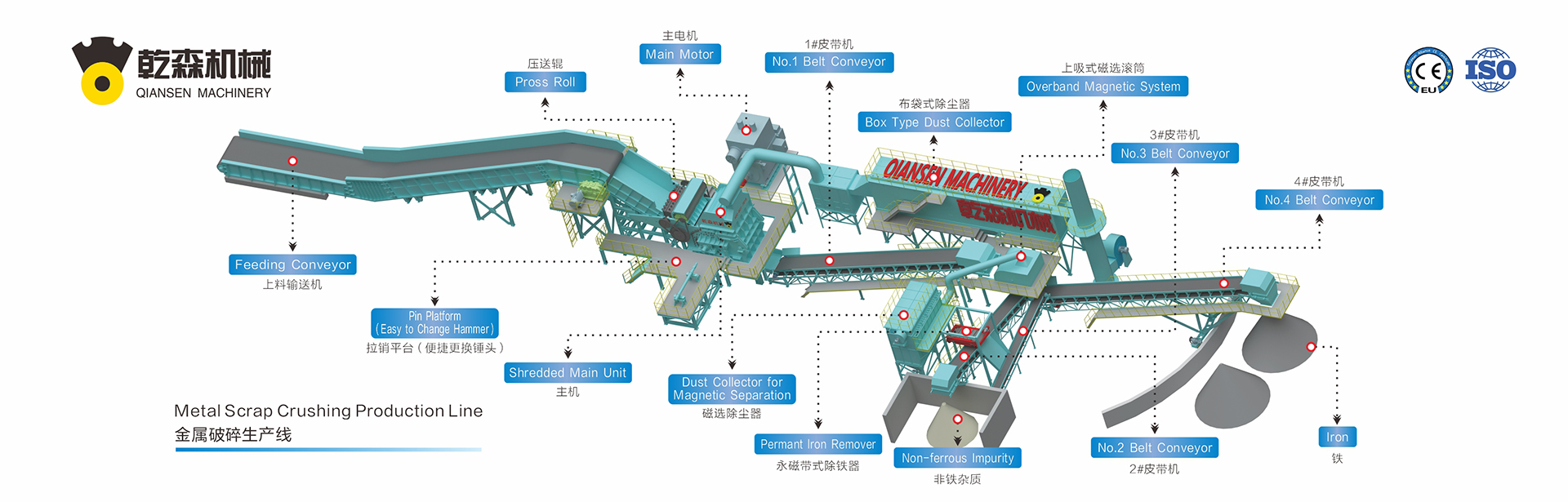
Air Classification and Dust Extraction: High-energy metal processing creates fines, rust clouds, and light debris. Integrated cyclone collectors and dust extraction hoods keep plant operations within local environmental compliance levels.
5. Overload Protection, Safety Systems, and Automation
Scrap yards inevitably encounter "unshreddables"—solid steel shafts, counterweights, or engine blocks that exceed the machine’s sheer force. How the machine handles these events dictates whether you face a brief operational pause or months of rebuilding a shattered drivetrain.
Modern industrial scrap processing requires automated PLC control architectures equipped with dynamic load sensing. The control panel must monitor motor current, hydraulic pressure, and shaft RPM in real time.
Automated Reverse Logic: When the PLC senses an amperage spike or hydraulic pressure peak caused by uncrushable tramp metal, it must instantly reverse the shafts to dislodge the material, attempt re-engagement, and shut down safely if the obstruction persists.
Mechanical Safeguards: Look for hydraulic relief valves, friction torque limiters, or replaceable shear pins that isolate the planetary gearboxes from destructive torsional shock.
Predictive Diagnostics: Modern IoT integration allows plant operators to monitor main bearing temperatures, vibration levels, and gearbox oil quality from a central dashboard, flagging internal bearing wear weeks before catastrophic seizure occurs.
6. Energy Efficiency and Total Cost of Ownership (TCO)
The upfront purchase price (CapEx) accounts for approximately 30% of an industrial shredder’s lifetime cost. The remaining 70% is consumed by electricity, routine maintenance, wear parts, and labor. Evaluating equipment on initial invoice cost alone is a critical purchasing error.
Calculate your processing cost on a kilowatt-hour per ton (kWh/Ton) basis. Heavy processing plants that run continuous eight-hour or sixteen-hour shifts burn significant utility budgets.
Motor Efficiency Standards: Demand premium-efficiency motors, such as IE3 or IE4 standard units. Over three years of multi-shift operation, energy savings from IE4 motors can offset their purchase price differential.
Variable Frequency Drives (VFDs): Using VFDs softens startup current spikes, reduces grid demand charges, and enables operators to adjust rotor speeds to fit fluctuating material bulk densities.
Hydraulic System Optimization: If running hydraulic units, ensure the HPU features load-sensing variable displacement pumps that throttle back oil flow during idle phases, cutting unnecessary heat build-up and electric power draw.
Equipment with slightly higher capital costs often delivers lower lifetime processing costs per ton, generating significantly higher net profits over its operational lifespan.
7. OEM Capability, Spare Parts SLA, and Field Support
Heavy recycling equipment operates under brutal mechanical punishment. Components will wear down, and operational issues will occur. When an iron scrap shredder machine goes down unexpectedly, every day of idle production bleeds operating capital.
Thoroughly audit the original equipment manufacturer (OEM) before finalizing contracts. A competent manufacturer acts as an engineering partner, not just a machinery vendor.
Tier-1 Component Sourcing: Inspect the bill of materials. Verify that bearings, seals, gearboxes, and electrical components come from internationally recognized suppliers such as SKF, Timken, Siemens, or Rexroth. Proprietary, no-name components complicate local sourcing down the road.
Spare Parts Availability and SLA: Ask direct questions about critical spares. Does the manufacturer keep shafts, blade blanks, and gear sets in regional stock? What is their guaranteed dispatch timeline for replacement components?
Commissioning and Field Training: Ensure the contract includes on-site installation supervision, cold and hot commissioning with your actual scrap feedstocks, and hands-on maintenance training for your field technicians.
Partnering with an established manufacturer like QianSen ensures that you receive structural steel fabrication backed by reliable after-sales field support and long-term engineering assistance.
FAQ: Industrial Scrap Shredder Procurement
Q1: What is the main difference between a single-shaft and a
double-shaft shredder for iron scrap?
A1: Single-shaft shredders use
a high-speed rotor paired with a hydraulic pusher ram and an sizing screen,
making them ideal for uniform size reduction of lighter materials. Double-shaft
shredders utilize two low-speed, high-torque counter-rotating shafts that grip
and shear bulky, heavy iron scrap without needing a pusher ram. For diverse,
heavy-duty scrap iron, double-shaft configurations are generally preferred.
Q2: How many hours can shredder blades run before requiring
replacement or maintenance?
A2: Blade life varies widely based on
feedstock abrasiveness and blade metallurgy. High-grade alloy blades processing
clean sheet scrap can achieve 1,000 to 1,500 operating hours before needing
maintenance. Processing sandy, contaminated scrap or abrasive cast iron can
reduce this interval to 500 hours or fewer. Regular hardface welding can extend
the overall operating life of the blade sets significantly.
Q3: How do I prevent unshreddable tramp iron from destroying the
machine?
A3: Protection relies on automated electrical and
mechanical safeguards. Modern machines employ PLC-controlled auto-reverse
systems that detect over-amperage or hydraulic spikes within fractions of a
second. The machine reverses the rotor to reposition or reject the object.
Heavy-duty drivetrains also feature mechanical safety devices, such as
torque-limiting clutches or hydraulic bypass circuits, to decouple rotational
momentum instantly.
Q4: Is hydraulic drive always superior to electric drive for heavy
metal scrap?
A4: Not always. Hydraulic drives excel in harsh,
unpredictable scrap environments because they deliver maximum torque at low
speeds and absorb shock loads naturally. However, modern electric drives paired
with planetary gearboxes and variable frequency drives are more
energy-efficient, quieter, and simpler to maintain. If your feedstock is
consistently sorted and sized, an electric drive typically yields lower
operating costs.
Q5: What throughput capacity should a medium-sized scrap yard aim
for?
A5: Most regional, medium-sized scrap yards require a
throughput between 5 to 15 metric tons per hour to maintain profitability
without underutilizing their loading equipment. Sizing depends on your
collection volume, the cycle times of your material handlers, and downstream
logistics like baling or smelting furnace intake schedules.
Invest in Engineered Reliability
Selecting the right scrap iron recycling equipment requires looking past superficial specs and glossy sales brochures. You must examine machine kinematics, blade metallurgy, control logic, and total cost of ownership. The goal is simple: maximize run time, minimize cost per processed ton, and protect your margins over decades of operation.
Are you unsure what shaft speed, motor wattage, or blade configuration matches your scrap mix? Contact the industrial recycling specialists at QianSen today. Send us your scrap specifications or ship material samples to our testing facility for a comprehensive shredding trial and a customized ROI proposal.