




Why is Shredding Car Engines the Most Profitable Segment in ELV Recycling?
Released on Jul. 02, 2026
The recycling of End-of-Life Vehicles (ELVs) presents a significant economic opportunity for industrial scrap yards and metal merchants worldwide. Within a decommissioned automobile, the powertrain assembly represents the highest concentration of valuable metal alloys, particularly secondary aluminum and high-grade cast iron. Historically, extracting these metals involved manual disassembly, torch cutting, or sending whole blocks directly to secondary smelters, resulting in low purity and reduced margins. The development of high-torque, low-speed industrial shredders has transformed how recycling facilities handle these tough components. Utilizing heavy machinery for shredding car engines allows operators to mechanically break down, liberate, and sort complex metal assemblies into high-purity commodities. This comprehensive analysis examines the engineering mechanics, operational challenges, and downstream separation systems involved in processing automotive engine scrap.
To establish a profitable processing line, yards require machinery capable of handling fluctuating scrap qualities and dense structures. QianSen designs and manufactures heavy-duty shredding plants capable of processing these heavy metal scrap types. Implementing a structured mechanical processing approach ensures that non-ferrous metals are recovered cleanly, reducing slag formation in smelter furnaces and maximizing the market value of the recovered scrap.
The Metallurgy and Composition of Automotive Engines
Before selecting processing machinery, operators must evaluate the material composition of modern vehicle engines. Automotive powertrains are not uniform blocks of metal; instead, they are complex assemblies consisting of diverse materials with different mechanical properties. A typical passenger vehicle engine block contains several distinct components:
Cast Iron: Historically the primary material for engine blocks, cast iron is heavy, brittle, and highly abrasive. It has excellent compressive strength but cracks relatively easily under heavy, concentrated impact forces.
Aluminum Alloys: Used widely in modern engine blocks, cylinder heads, and pistons to reduce vehicle weight. Common alloys include cast aluminum with varying silicon and copper content, which are ductile and require precise shearing forces to separate from steel inserts.
Alloy Steels: Found in crankshafts, camshafts, connecting rods, and high-tensile fasteners. These components are extremely tough and resist simple crushing or low-force shearing.
Copper and Brass: Present in wiring harnesses, sensors, and ancillary fittings, representing a high-value fraction that must be liberated completely to avoid contaminating the steel and aluminum streams.
Processing these materials simultaneously requires machinery that exerts both high shearing force and heavy impact. Ductile aluminum tends to smear and trap steel fasteners if sheared incorrectly, whereas cast iron can shatter violently, producing sharp fragments that accelerate wear on internal shredder components. Managing these physical interactions is fundamental to maintaining a continuous scrap recycling operation.
Mechanical Principles of Shredding Car Engines
The processing of whole automotive engines or transmissions relies on a multi-stage reduction process. Direct processing in a standard hammer mill without pre-reduction can lead to massive rotor shock, high energy spikes, and premature structural failure of the machinery. Therefore, structured recycling lines utilize a two-stage mechanical reduction process.
Primary Shearing and Pre-Reduction
The first stage involves a high-torque, low-speed dual-shaft shredder designed to handle heavy metal scrap. In this stage, whole engine blocks with internal steel components are fed into the hopper. The shafts turn inward at low speeds, usually between 10 and 15 revolutions per minute, utilizing massive hydraulic or direct electric torque to grip and shear the metal.
The blades on the shafts feature aggressive hook geometries that grab the engine block, utilizing the casing's structural weak points to crack the outer cast iron or aluminum shell. Because the shafts rotate at low speeds, this process produces minimal dust, reduces the risk of high-velocity projectile ejections, and keeps noise levels within manageable industrial limits. The output from this primary stage consists of fractured engine chunks ranging from 100mm to 200mm in size, with most internal steel crankshafts and pistons liberated from their aluminum casings.
Secondary Granulation and Densification
The pre-reduced engine scrap is transported via heavy-duty vibratory feeders to a secondary hammer mill or vertical shredder. Here, high-speed rotors equipped with heavy manganese steel hammers strike the fractured metal pieces against internal breaker plates and grates. This high-velocity impact serves two distinct purposes:
De-shingling and Deep Liberation: The continuous impact knocks loose any steel studs, bearings, or brass bushings still embedded in the aluminum engine block fragments.
Densification: The hammers fold and shape the ductile aluminum fragments into dense, rounded nuggets. This shape change increases the bulk density of the scrap, making it easier to transport and reducing metal loss during the melting phase in secondary smelters.
Managing Tool Wear and Machinery Lifespan
The abrasive nature of automotive cast iron and the presence of high-tensile steel crankshafts make wear management a major operational focus for scrap processors. Unplanned downtime due to tool dulling or rotor damage can quickly erode the profitability of a recycling facility. To mitigate these issues, heavy-duty scrap shredders require robust material choices and design features.
Cutting blades used in the primary dual-shaft shredder are typically manufactured from high-alloy tool steels. These steels undergo specialized heat treatments to achieve a balance between hardness, to resist abrasive wear, and toughness, to prevent chipping when encountering solid steel shafts. Some configurations use segmented blades with replaceable wear teeth, allowing operators to change individual wear parts rather than replacing an entire blade disk.
For secondary hammer mills, the selection of manganese steel alloy for the hammers is standard. Manganese steel possesses work-hardening properties; under continuous high-velocity impact, the outer layer of the steel increases in hardness, while the inner core remains ductile to absorb heavy shocks. Operators must establish a regular hard-facing maintenance schedule, applying weld overlays to worn hammer faces to maintain processing efficiency and prevent balance issues on the main rotor.
Residual fluids present another operational challenge. Even after standard depollution procedures, automotive engines often retain residual motor oil, coolant, and transmission fluid. These liquids can mix with fine metal dust to create an abrasive paste that damages bearings and seals. To address this, industrial metal shredders from QianSen utilize split-bearing housings and independent seal barriers to prevent contamination from entering the drive system components.
Downstream Separation and Sorting Technologies
The economic value of shredding car engines is realized after the mechanical reduction phase through precise material sorting. A mixed output of aluminum, iron, and steel has low commercial value. Processing facilities implement automated sorting lines directly after the secondary shredder to produce clean, single-material fractions.
Magnetic Separation for Ferrous Metals
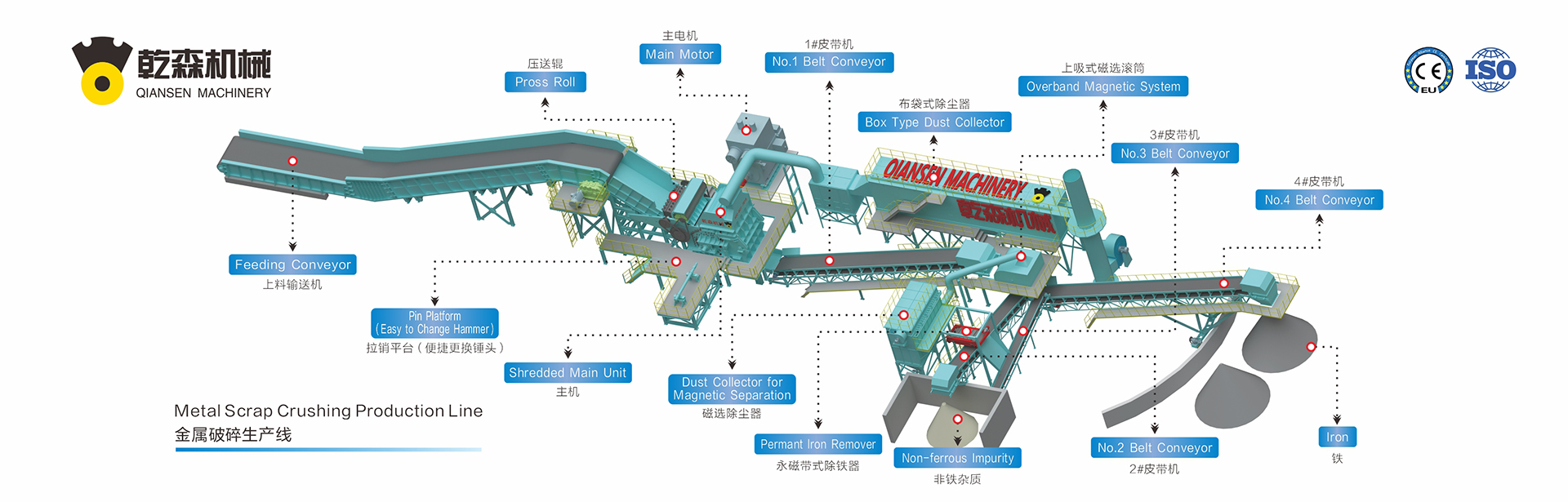
The shredded material stream first passes under a high-intensity magnetic drum or overbelt magnetic separator. This magnet attracts and removes all ferrous metals, including the fractured cast iron block pieces, steel crankshafts, and fasteners. Because these steel parts have been completely liberated from the aluminum castings in the hammer mill, the resulting ferrous fraction contains very low non-ferrous contamination, meeting the strict specifications of steel mills.
Eddy Current Separation for Aluminum Recovery
The remaining non-magnetic material stream consists of aluminum nuggets, brass fittings, insulated copper wire, and non-metallic residues such as rubber hoses, seals, and dirt. This stream is directed onto an eddy current separator. The separator uses a rapidly spinning rotor containing high-strength permanent magnets, which induces electrical currents (eddy currents) in the conductive aluminum pieces. This induction creates an opposing magnetic field that repels the aluminum off the conveyor belt into a dedicated collection chute, while the non-conductive plastics, rubber, and glass drop vertically into a waste bin.
Sensor-Based Sorting for Premium Grades
For facilities aiming to produce premium-grade aluminum scrap for automotive casting foundries, additional sorting is necessary. Wrought aluminum alloys (from brackets) and cast aluminum alloys (from the engine block itself) have different market values and melting points. Advanced recycling lines use X-ray Transmission (XRT) or Laser-Induced Breakdown Spectroscopy (LIBS) systems to detect and separate these alloy groups automatically, ensuring the output meets precise metallurgical requirements.
Operational Criteria for Selecting B2B Shredding Equipment
When purchasing an industrial metal shredding plant, procurement managers must evaluate several operational specifications to match their specific facility goals:
| Operational Parameter | Key Consideration | Impact on Processing Line |
|---|---|---|
| Drive System Type | Hydraulic vs. Direct Electric Drive | Hydraulic drives provide high torque at low speeds and automatic overload protection, making them suitable for unpredictable engine scrap feeds. Electric drives offer higher energy efficiency during continuous, uniform operations. |
| Rotor Diameter & Speed | Determines the kinetic energy capacity | Larger rotor diameters allow the use of heavier hammers, which is necessary for fracturing thick-walled commercial vehicle engine blocks. |
| Tooth Profile Design | Hook configuration and spacing | Determines how effectively the primary shredder grabs cylindrical cast iron blocks, preventing material slippage and improving throughput consistency. |
| Maintenance Accessibility | Hydraulic chamber opening mechanisms | Reduces the time required to perform routine blade inspections, hard-facing welding, and hammer rotations. |
Selecting the correct machinery configuration depends on the average weekly volume of ELVs processed. While mobile units offer flexibility for operators running multiple regional yards, large-scale stationary plants provide the structural rigidity and high throughput required for continuous industrial processing.
Industrial Inquiries
Establishing a reliable, profitable engine recycling line requires selecting the correct machinery configuration to match your processing volume and purity targets. QianSen provides industrial-grade shredding plants designed to process automotive scrap under demanding conditions. If you are planning to upgrade your ELV processing facility or require technical specifications for high-capacity shredders, please contact our engineering department to discuss your project requirements and receive a detailed equipment proposal.
Frequently Asked Questions
Q1: What is the typical throughput of an industrial line designed for shredding car engines?
A1: Throughput varies depending on the system configuration and drive power. A standard industrial setup utilizing a high-torque pre-shredder followed by a secondary hammer mill can process between 5 to 20 metric tons of engine blocks per hour. Large-scale custom recycling plants can achieve higher capacities depending on feed consistency and power availability.
Q2: Can these shredding systems process car engines with the steel crankshafts and pistons still installed?
A2: Yes. High-torque dual-shaft pre-shredders are designed specifically to handle complete engine assemblies, including steel crankshafts, pistons, and camshafts. The initial shearing action breaks the outer castings, while the subsequent hammer mill processing breaks down and separates the steel components from the aluminum parts.
Q3: How does the system handle residual engine oil and fluids during the shredding process?
A3: While vehicles should undergo depollution before processing, residual fluids are common. QianSen equipment incorporates specialized bearing seals to prevent grease and oil from entering sensitive drive systems. Downstream systems can also include dust extraction and liquid collection trays to capture and manage these fluids safely.
Q4: What is the typical lifespan of shredder blades when processing engine scrap?
A4: Blade lifespan depends on the alloy composition of the scrap and the maintenance schedule. Typically, high-alloy steel cutting disks can process several thousand tons of material before requiring hard-face welding or replacement. Regular inspection and timely weld build-ups can significantly extend the life of the blades.
Q5: How is the aluminum separated from the steel after the engine is shredded?
A5: Separation is achieved through a multi-stage physical sorting process. First, a magnetic drum or overbelt magnet removes all ferrous metals, such as cast iron and steel. Second, an eddy current separator isolates the non-ferrous aluminum from the remaining non-metallic waste, ensuring high-purity metal fractions.